


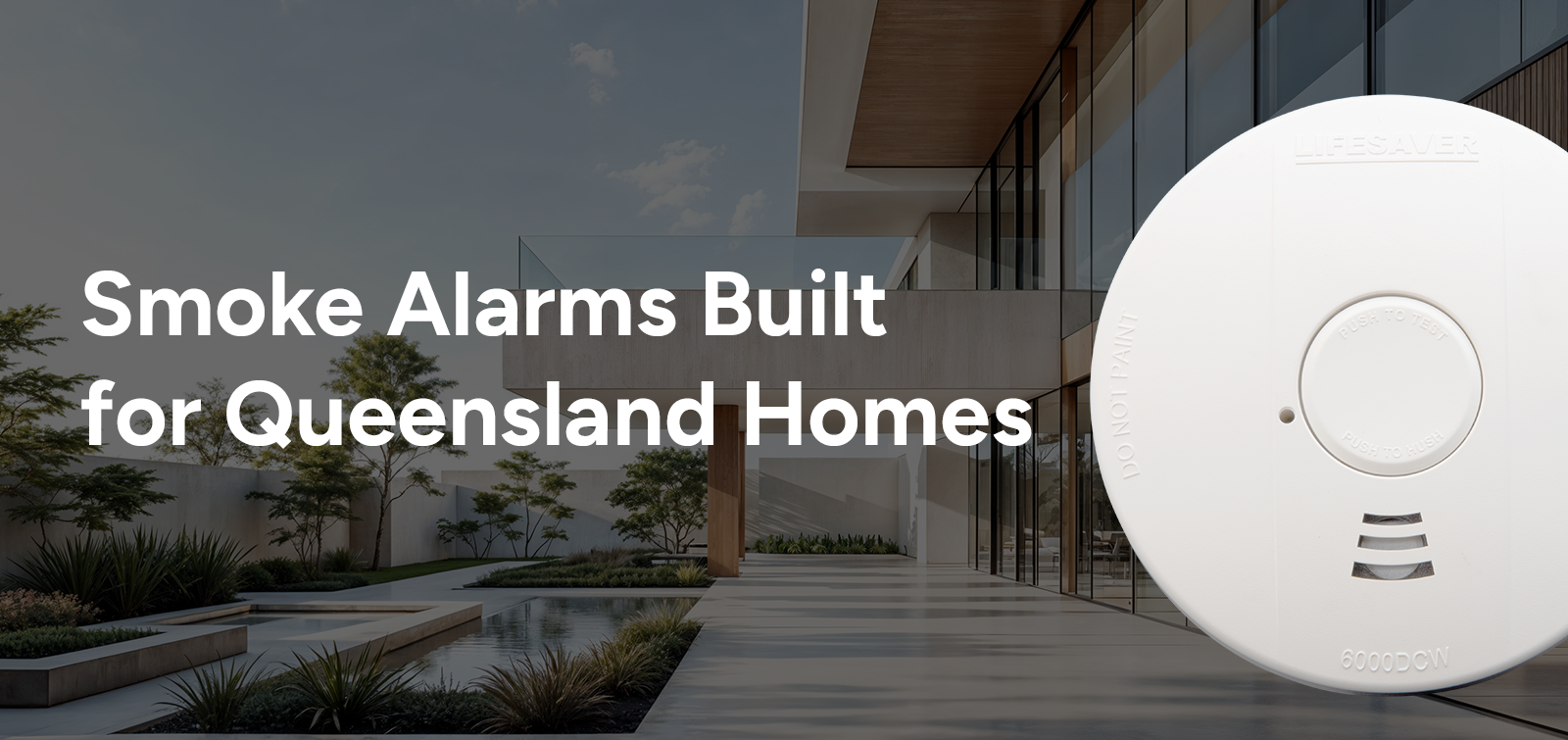
By 1 January 2027, the final phase of Queensland’s smoke alarm legislation comes into force, extending interconnected photoelectric alarm requirements to every remaining owner-occupied dwelling in the state.
In practice, that means every Queensland home not already covered by the 2017 or 2022 phases needs compliant interconnected photoelectric smoke alarms installed before the deadline. For an industry already familiar with those earlier phases, this final stage is less about new obligations and more about closing a large residual gap.
What Queensland requires by 2027
- From 1 January 2027, every remaining owner-occupied home in Queensland must have interconnected photoelectric smoke alarms.
- Queensland rental properties and homes being sold have needed compliant alarms since 1 January 2022, not 2027.
- Alarms must be photoelectric and certified to AS3786:2014. Ionisation alarms do not meet the Queensland requirement.
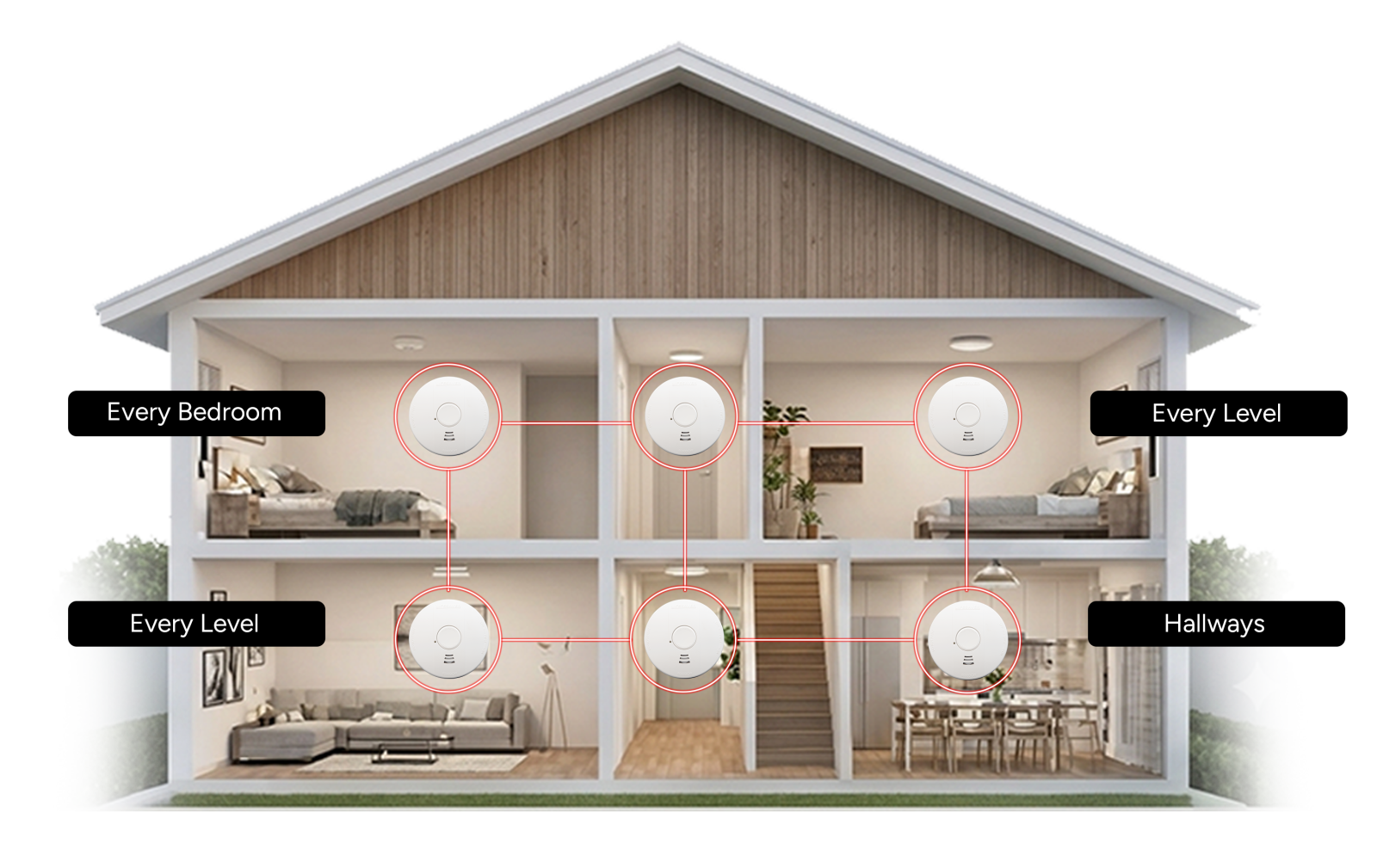
- Alarms are required in every bedroom, in hallways connecting bedrooms, and on every storey of the dwelling.
- Hardwired alarms must be installed by a licensed electrician. Wireless alarms with a sealed 10-year lithium battery do not.
- Any smoke alarm older than 10 years must be replaced, regardless of whether it still works.
Quantifying the Queensland compliance gap
The Queensland Fire Department’s 2025 Community Insights Survey (Ipsos, n=2,100, June 2025) provides the most current dataset on where the state actually stands:
- Installation rate of interconnected smoke alarms (ISAs) sits at 52%, leaving an estimated 48% of dwellings non-compliant.
- Deadline awareness is lower still, at 54%, meaning close to half of respondents were not aware a final compliance date exists at all.
- Regional variance is significant: Innisfail recorded the lowest installation rate at 43%, against 61% in Rockhampton, suggesting compliance activity is uneven across the state rather than following a single adoption curve.
- Of the non-compliant cohort, 67% indicated an intention to install within 12 months (71% among owner-occupiers) though stated intent in survey data is typically a weak predictor of actual installation timelines.
Applied against the ABS 2021 Census figure of roughly 2.2 million private Queensland dwellings, a 48% non-compliance rate implies close to a million properties requiring upgrade work to meet Queensland smoke alarm requirements before the deadline.
One data point stands out from a risk-modelling perspective: awareness correlates strongly with maintenance behaviour. Respondents aware of the legislation reported testing or maintaining their alarms at a 63% rate, versus 23% among those unaware. This suggests households that don’t know a deadline exists are also the households least likely to be maintaining whatever alarms they currently have.
The regulatory basis for the 2027 deadline
The current requirements sit under the Fire and Emergency Services Act 1990 and were introduced via the Building Fire Safety (Domestic Smoke Alarms) Legislation Amendment Regulation 2016, rolled out in three stages:
- 1 January 2017 — new builds and substantially renovated dwellings (building applications from this date)
- 1 January 2022 — all dwellings leased or sold
- 1 January 2027 — all remaining owner-occupied dwellings
The legislative origin is the 2011 Slacks Creek house fire, in which 11 people died, including eight children. The coronial inquest identified the absence of working smoke alarms as a contributing factor and recommended the regulatory overhaul that followed.
Why photoelectric smoke alarms are required
The standard doesn’t just mandate “a smoke alarm”, it specifies photoelectric sensing and prohibits ionisation sensors outright. The distinction is a genuine technical one, and it is why photoelectric smoke alarms are the only type that will meet the Queensland requirement.
Photoelectric sensors use a light-scattering mechanism: a beam inside the chamber is disrupted by smoke particles, scattering light onto a sensor that triggers the alarm. This design responds faster to smouldering, low-flame combustion, the slow-burning, high-smoke-output fires that are statistically the more common ignition pattern in residential house fires (upholstery, bedding, electrical faults).
Ionisation sensors use a small radioactive source to ionise air within a chamber, detecting disruptions in the resulting current. They tend to respond faster to flaming fires with less smoke, but lag significantly behind photoelectric sensors in smouldering-fire scenarios, which is the exact scenario overrepresented in fatal house fires, which is the primary basis for their exclusion from the QLD standard.
Every compliant alarm must also carry certification to AS 3786:2014, the current Australian Standard governing smoke alarm construction and performance testing.
Interconnection and power requirements
Interconnection means every alarm in a dwelling is wired or wirelessly linked so that a trigger event in one location sounds all alarms simultaneously. In a multi-storey or multi-bedroom layout, this removes the dependency on occupants being within range of the single alarm nearest the fire origin.
Power source requirements
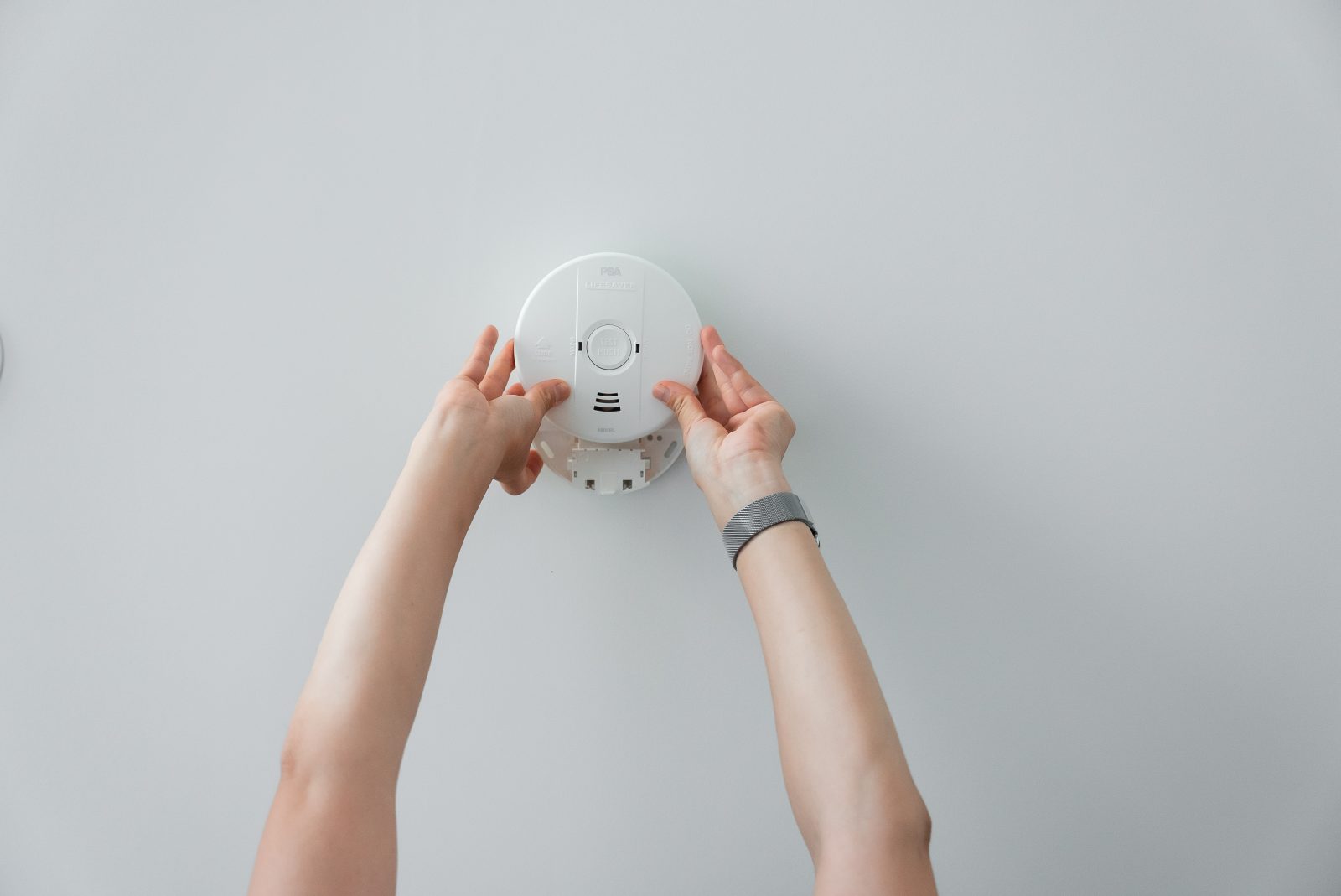
- Hardwired alarms draw from mains power (typically with battery backup) and must be installed by a licensed electrician. If existing alarms in a dwelling are hardwired, replacements must match like for like.
- Wireless interconnected alarms run on a non-removable 10-year lithium battery and can be installed without an electrician, provided placement and interconnection requirements are met.
Placement requirements apply to every bedroom, every hallway that connects bedrooms, and every storey of the dwelling. Where a storey has no bedroom, an alarm is required in the most likely path of travel to exit the dwelling.
Registered caravans and motorhomes
This is a separate requirement, not part of the interconnection rules above. From 1 July 2024, all registered caravans and motorhomes must be fitted with a photoelectric smoke alarm. The obligation is for a photoelectric alarm, not for an interconnected system.
If you own a rental property, you should already be compliant
The 2027 deadline applies to owner-occupied homes. Queensland rental properties have needed compliant interconnected photoelectric smoke alarms since 1 January 2022, at the start of any new tenancy or lease renewal.
That distinction matters, because a landlord reading about a 2027 deadline may reasonably assume they have time. They don’t. Landlord obligations also go beyond installation – under the Residential Tenancies and Rooming Accommodation Act 2008, alarms must be tested and cleaned within 30 days before a new tenancy starts or a lease renews.
Full detail on landlord duties, tenant responsibilities, the 30-day rule and compliance documentation is covered in our Queensland smoke alarm laws for landlords guide.
Practical compliance checklist
For anyone auditing an existing smoke alarm ahead of the deadline:
- Check the smoke alarm for the AS3786-2014 certification mark.
- Check if it is ionisation or photoelectric. Ionisation smoke alarms carry a radiation logo on the housing to warn of hazardous radioactive materials inside.
- Check the date of manufacture. If the smoke alarm is older than 10 years it required immediate replacement – a sealed 10 year smoke alarm removes the annual battery-change step.
- Confirm the power source matches across the system. Hardwired systems require hardwired replacements.
- Map placement against every bedroom, connecting hallway, and storey.
- Establish a testing routine. Compliance at installation doesn’t guarantee compliance at inspection. Monthly testing and periodic dust removal from sensor vents are part of maintaining a functioning system.
PSA’s smoke alarm range is manufactured to AS3786:2014, available in both hardwired and 10-year wireless configurations, and in stock now. If you are managing properties outside Queensland, our smoke alarm legislation guides for every state and territory cover the equivalent requirements.
View PSA’s compliant smoke alarm range →
Data source: Queensland Fire Department Community Insights Survey 2025 (Ipsos, August 2025); Queensland Fire Department Smoke Alarms in Queensland External Engagement Toolkit 2026.
FAQ
From 1 January 2027, all remaining owner-occupied dwellings in Queensland must have interconnected photoelectric smoke alarms. Homes built or substantially renovated since 2017, and properties leased or sold since 2022, are already covered by earlier phases of the legislation.
Only if the alarms are hardwired. Wireless interconnected alarms with sealed 10-year lithium batteries can be installed without an electrician. If your existing alarms are hardwired, replacements must also be hardwired and fitted by a licensed electrician.
One in every bedroom, one in every hallway connecting bedrooms, and at least one on every storey. Where a storey has no bedroom, an alarm is required in the most likely path of travel to exit the dwelling.
No. Queensland rental properties have needed compliant interconnected photoelectric smoke alarms since 1 January 2022, from the start of a new tenancy or lease renewal. The 1 January 2027 deadline applies to owner-occupied homes that have not been sold, leased or substantially renovated.
No. Alarms installed to meet the Queensland standard must be photoelectric smoke alarms and must not contain an ionisation sensor. Ionisation alarms carry a radiation symbol on the housing, which is the quickest way to identify them during an audit.
The obligation sits with the property owner. Non-compliance can attract infringement notices under the Fire Services Act 1990, but the larger exposure is usually civil and insurance-related: if a fire occurs in a non-compliant dwelling, insurers may dispute a claim and owners can face liability. Records of installation and testing are the evidence that the obligation was met.
