Smoke alarms are a legal requirement across Tasmania and must be installed correctly and kept in working order. Under the National Construction Code and applicable Tasmanian building regulations, every residential property needs a working smoke alarm on every level of the home. All alarms must comply with Australian Standard AS 3786:2014.

The type of alarm required, how it is powered, whether it needs to be interconnected, and who is responsible for maintenance all depend on when the property was built and whether it is rented.

Shop Compliant Smoke Alarms

What The Tasmania Legislation Requires

Here are the main smoke alarm laws Tasmania homeowners and landlords should know:

Basic Requirements

  • At least one working smoke alarm must be installed on every level of the home.
  • Smoke alarms must comply with Australian Standard AS 3786:2014.
  • Alarms must be installed in every hallway or corridor connected to bedrooms, or in the area between the bedroom and the rest of the level where no hallway exists.

Rental Property Requirements

  • All smoke alarms must be either mains-powered or fitted with a non-removable 10-year lithium battery.
  • Alarms must be tested and confirmed to be working before a new tenancy begins.
  • Faulty alarms must be repaired or replaced as soon as practicable after the rental provider is notified.
  • Alarms must be replaced every 10 years from the date of manufacture.

New Builds & Building Work

  • Properties built or substantially renovated on or after 1 May 2014 require alarms to be hardwired to 240V mains power.
  • Where more than one alarm is required, alarms must be interconnected so that when one sounds, they all sound.
  • A licensed electrician must install hardwired smoke alarms.

Note: This is a general guide only. Requirements can vary depending on the property’s age, layout, and whether it has been renovated or extended. If you are unsure, speak with a licensed electrician or fire safety professional.

Who It Applies To & When

Tasmania smoke alarm laws apply to all residential properties. Requirements vary based on when the property was built or last renovated.

The timeframes are as follows:

Battery-powered alarms are permitted, but a working alarm must still be installed on every level. If the property undergoes major renovations requiring a building permit, hardwired alarms become mandatory.

All new residential builds require smoke alarms hardwired to mains power. Existing properties undergoing major permitted renovations must also have at least one mains-powered alarm on each level.

Properties built or substantially renovated from this date must have alarms hardwired to 240V mains power, and interconnected where more than one alarm is installed.

All rental properties must have mains-powered smoke alarms on every level. Where mains installation is not possible, an alarm with a fixed, non-removable 10-year lithium battery is an accepted alternative.

From this date, Tasmania’s Residential Tenancy Act formally set out what landlords and tenants are each responsible for regarding smoke alarms. See the Roles & Responsibilities section below for the full breakdown.

Where Smoke Alarms Must Be Installed In Tasmania

Smoke alarms should be installed so they provide the earliest possible warning to people in sleeping areas. In practical terms:

  • Install at least one alarm on every level of the home.
  • Place alarms in hallways or corridors connecting bedrooms to the rest of the level.
  • Where there is no hallway, install an alarm between the bedroom area and the rest of the level.
  • In multi-storey homes, install an alarm at the top of all stairways.
  • Mount alarms on the ceiling where possible, at least 30cm from walls and away from air vents and cooking appliances.

The Tasmania Fire Service recommends going further: a smoke alarm in every bedroom, living area and garage, and at the top of each stairwell. Interconnecting alarms so they all sound together is strongly recommended, even where it is not yet a legal requirement for older properties.

Keep alarms away from bathrooms, cooking areas, and air conditioning vents. Steam and cooking fumes can trigger false alarms.

Photoelectric vs Ionisation Smoke Alarms

The Tasmania Fire Service recommends photoelectric smoke alarms for all sleeping areas, living areas, hallways, and stairwells, specifically a photoelectric alarm with a 10-year-long-life lithium battery.

Photoelectric alarms are better suited to the slow, smouldering fires that typically start in bedrooms overnight, giving families more time to escape. They also produce fewer nuisance alarms from cooking fumes or steam, and contain no radioactive material.

Ionisation alarms are not prohibited under current Tasmanian legislation, but they are not recommended. If existing alarms are approaching 10 years old, replacing them with photoelectric alarms is the right choice. For rental properties, meeting current standards effectively means installing photoelectric alarms.

Special Property Types

The rules below are based on how buildings are classified under the National Construction Code. If you’re not sure which category applies to your property, a licensed electrician or building surveyor can confirm it.

Houses, Townhouses and Granny Flats (Class 1a)

Install an alarm on every level. In levels with bedrooms, place an alarm in the hallway connecting those bedrooms to the rest of the home. If there is no hallway, install one between the bedroom area and the rest of that level. For a granny flat or self-contained ancillary dwelling, place an alarm between the sleeping area and the rest of the space.

Small Guesthouses and Boarding Houses up to 12 Guests (Class 1b)

Install an alarm on every level. On levels with bedrooms, fit an alarm in each bedroom and in any hallway serving those bedrooms. Where there is no hallway, place one between the bedroom area and the rest of the floor. Alarms are also required on levels with no bedrooms.

Apartments and Blocks of Flats (Class 2)

Each apartment needs an alarm on every level. On levels with bedrooms, install an alarm in each hallway serving those bedrooms, or between the bedroom area and the rest of the apartment, where there is no hallway. On levels without bedrooms, alarms must be installed along escape routes.

Boarding Houses and Caretaker Residences (Class 3 and 4)

Follow the same rules as the apartments above.

Caravans, Boats and Mobile Property

The Tasmania Fire Service recommends installing a smoke alarm in all caravans, boats and mobile properties where people sleep. A long-life lithium battery alarm is the most practical option.

If you are unsure which building class applies to your property, speak with a licensed electrician, building surveyor, or contact CBOS Tasmania directly.

Roles & Responsibilities

Home Owner / Occupier

  • Ensure smoke alarms that comply with AS 3786:2014 are installed in all required locations.
  • Test each alarm at least once every 12 months.
  • Clean alarms regularly and replace the unit when it reaches the end of its service life (10 years from the manufacture date).
  • For hardwired alarms, replace the stand-by (backup) battery immediately if it is spent.

Rental Provider (Landlord or Agent)

  • Install photoelectric smoke alarms that comply with AS 3786:2014 in the required locations.
  • Ensure alarms are either mains-powered or fitted with a sealed, non-removable 10-year lithium battery.
  • Clean, test and confirm all alarms are working before the start of each new tenancy.
  • Replace any faulty alarm as soon as practicable after being notified.
  • Replace all alarms every 10 years from the manufacture date.

Note for property managers: alarms must be tested and working before the tenancy starts, not necessarily on move-in day itself. Build this into your pre-tenancy inspection schedule. Compliance is overseen by Consumer, Building and Occupational Services (CBOS) Tasmania. Rental providers who fail to meet their obligations may be subject to a smoke alarm infringement notice.

Renter (Tenant)

  • Test and clean alarms regularly during the tenancy.
  • Keep alarms clear of dust and debris.
  • Notify the rental provider promptly if a fault is found.
  • Do not remove, disable or tamper with any smoke alarm.

A Quick Checklist (Smoke Alarm Compliance Tasmania)

  • Does every level of the home have at least one working smoke alarm?
  • Are alarms installed in hallways connecting bedrooms, or between bedrooms and the rest of the level?
  • If the home was built or renovated from 1 May 2014, are alarms hardwired and interconnected?
  • If the property is rented, are the alarms mains-powered or fitted with a sealed 10-year lithium battery?
  • Have alarms been tested and cleaned before the current tenancy started?
  • Have any alarms reached, or nearly reached, 10 years from the manufacture date?

FAQ

Interconnection is legally required for properties built or substantially renovated on or after 1 May 2014. For older properties, it is not yet mandated, but the Tasmania Fire Service strongly recommends it. In rental properties, interconnected alarms represent best practice and align with legislative direction.

The rental provider must test and clean all alarms before each new tenancy begins. Once the tenancy is underway, the tenant is responsible for regularly testing and cleaning the alarms and for promptly reporting any faults to the rental provider.

Ionisation alarms are not prohibited under current Tasmanian legislation, but the Tasmania Fire Service does not recommend them. If your alarms are nearing the 10-year mark, replacing them with photoelectric alarms is the right choice. For rental properties, current standards effectively require photoelectric alarms.

If you are a landlord, CBOS Tasmania can issue a formal infringement notice. For any property, it means your home does not meet the legal minimum. It is worth sorting before a problem arises rather than after.

Every 10 years from the manufacture date, not the installation date. The manufacture date is printed on the back of the alarm.

Yes. In older homes where running new wiring is not practical, wireless interconnection is an accepted solution. PSA makes wireless bases and modules that allow both hardwired and battery-powered alarms to be linked into a compliant interconnected network without new cabling.

Tasmania does not currently require a pre-sale smoke alarm compliance certificate. Confirming compliance before settlement is still recommended, as buyers and conveyancers increasingly raise it during due diligence.

*Information is correct as of 2026. Details may change without notice. Please refer to specific State websites for any changes.

Follow these links for more information on the Tasmania Smoke Alarm Legislation:

How PSA Can Help

PSA’s range of smoke alarms and accessories covers every Tasmanian property type, from older homes through to new builds and rental properties.

Compliant Protection

Photoelectric alarms that meet AS 3786:2014 and interlink so that if one activates, they all sound.

Options For Every Property

Choose between 240V mains-powered alarms or sealed 10-year battery alarms to suit your property’s requirements.

Simple To Install And Use

Easy test, hush-and-locate functions, plus accessories for neat installs on high or angled ceilings.

Scales To Any Home

PSA systems interlink up to 24 alarms, covering every bedroom, hallway and level as needed.

Protecting Australian Homes Since 1985

One of the first smoke alarm brands in Australia, still trusted by families and electricians nationwide.

Hardwired Smoke Alarms

Permanently connected to mains power for continuous protection. Required in Tasmania for properties built or renovated from 1 August 1997, and must be interconnected in properties built or renovated from 1 May 2014. Installation should be carried out by a licensed electrician.

LIF6800

  • Photoelectric smoke alarm
  • Complies with AS3786:2014
  • 240V with 9v Backup battery
  • Interconnectable with up to 24 other smoke alarms and ancillary products
  • Can use wireless base (LIF6000WB) and wireless module (LIF6000WIRM) for wireless solutions.
Learn More

LIF6800RL

  • Photoelectric smoke alarm
  • Complies with AS3786:2014
  • 240V with 10-year rechargeable lithium backup battery
  • Interconnectable with up to 24 other smoke alarms and ancillary products
  • Can use wireless base (LIF6000WB) and wireless module (LIF6000WIRM) for wireless solutions
Learn More

HG3000

  • Photoelectric smoke alarm
  • Complies with AS3786:2014
  • 240V with 9v Backup battery
  • Interconnectable with up to 24 other HG3000 smoke alarms.
Learn More

LIF5800ACF

  • Photoelectric Smoke alarm
  • Complies with AS3786:2014
  • 240V with Sealed 10 year battery
  • Flush mounting design
Learn More

HG140AC

  • Photoelectric smoke alarm
  • Tested and approved to the AS3786 standard.
  • Equipped with a loud 85dBA sounder compliant with ISO8201.
  • Operates as a single unit or can interconnect with up to 48 alarms.
  • Comes with a 10-year warranty for long-lasting protection.
Learn More

Battery-Powered Smoke Alarms

Sealed 10-year lithium battery alarms with no wiring required and no annual battery changes. A practical and compliant option for older properties and rental properties where hardwiring is not possible under Tasmanian requirements.

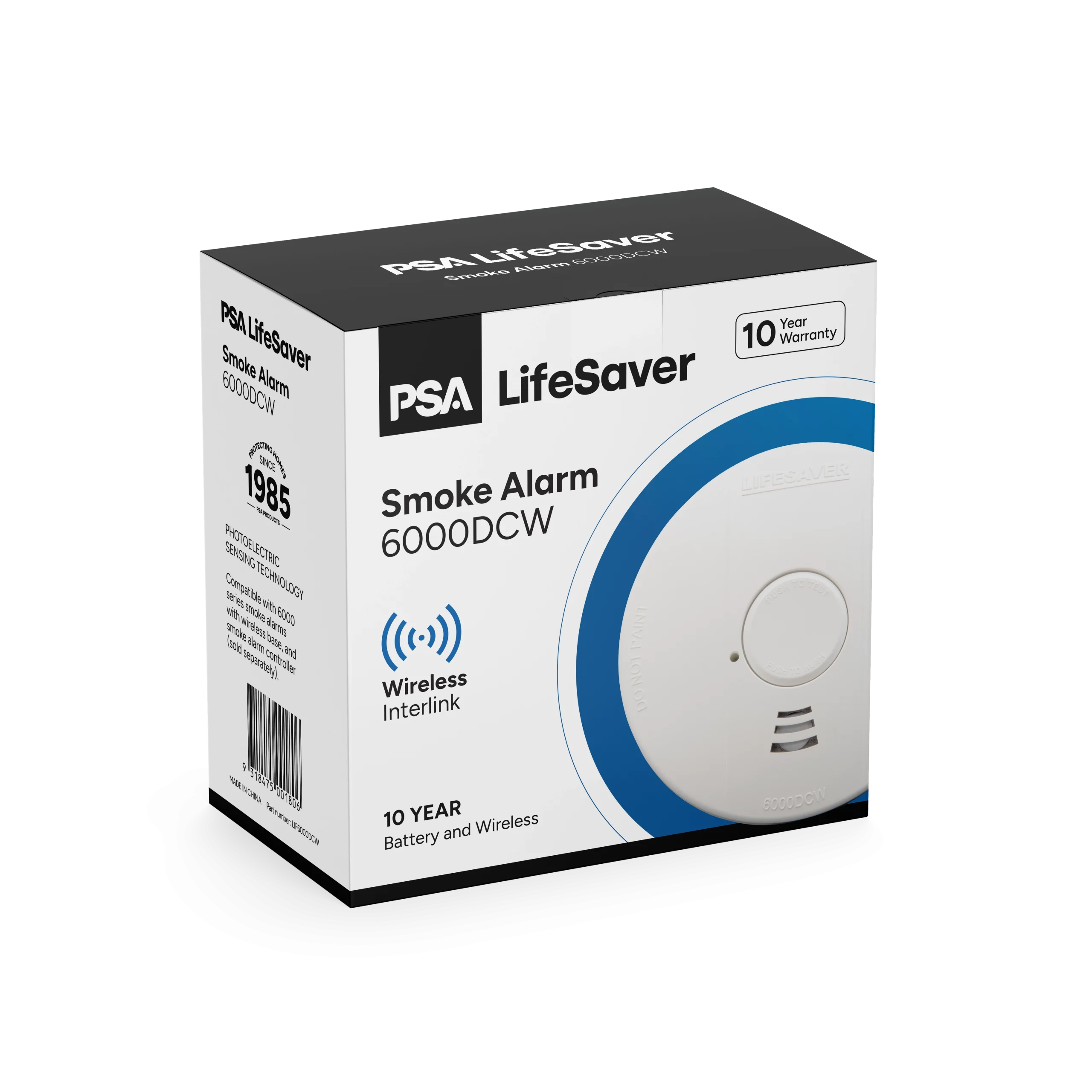
LIF6000DCW

  • Photoelectric smoke alarm.
  • Complies with AS3786:2014.
  • Sealed nonreplaceable 10-year lithium battery.
  • Interconnectable with up to 24 other wireless smoke alarm products.
Learn More

LIFPE10LP

  • Photoelectric Smoke alarm
  • Complies with AS386:2014
  • Sealed nonreplaceable 10-year lithium battery
  • Super flush award-winning design
Learn More

Wireless Solutions

Where running new cabling is not practical, PSA’s wireless base and module allow both hardwired and battery alarms to be interconnected wirelessly. A straightforward way to meet Tasmania’s interconnection requirements in older or mixed installations.

LIF6000DCW

  • Photoelectric smoke alarm.
  • Complies with AS3786:2014.
  • Sealed nonreplaceable 10-year lithium battery.
  • Interconnectable with up to 24 other wireless smoke alarm products.
Learn More

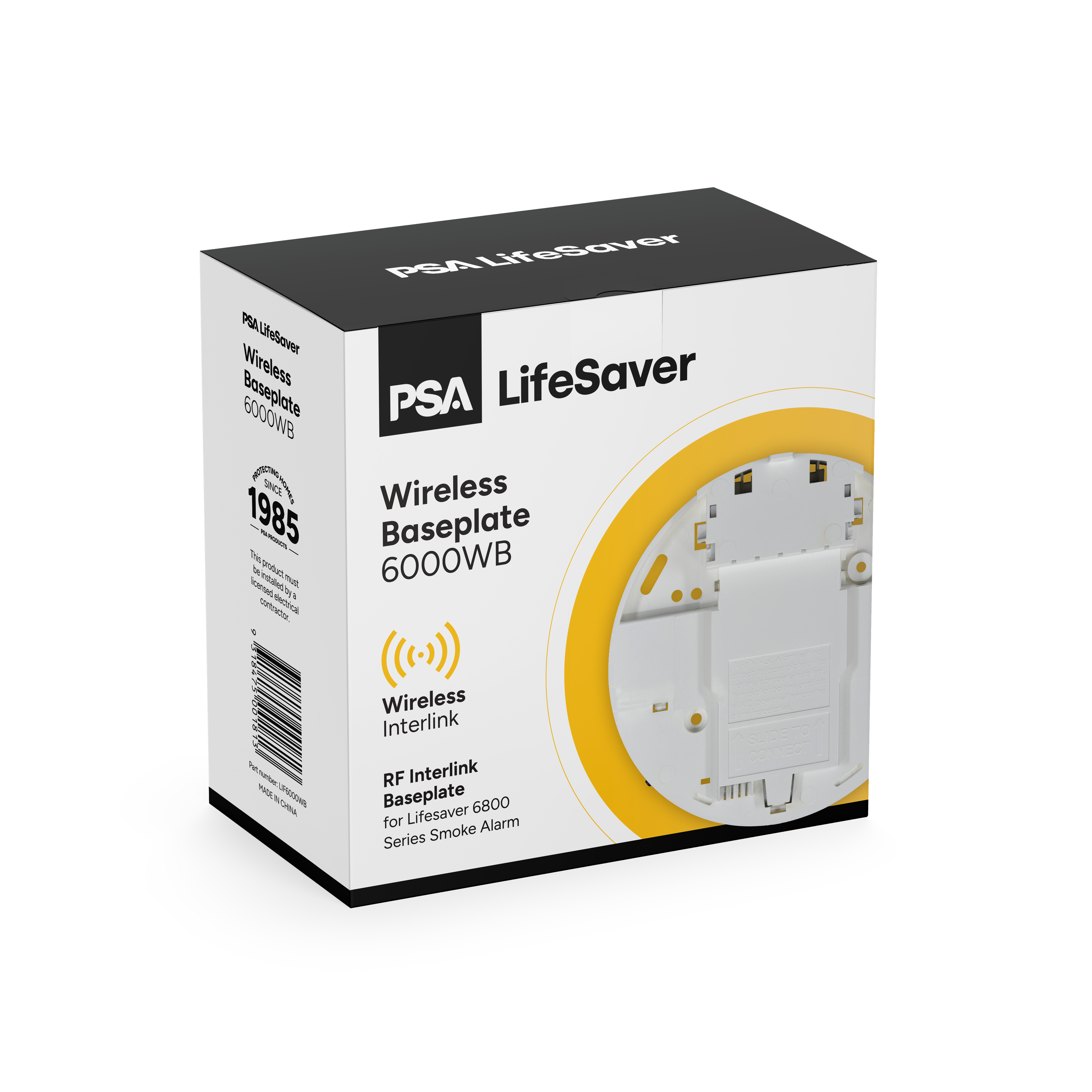
LIF6000WB

  • Allows LIF6800 and LIF6800RL smoke alarms to be wirelessly interconnected.
  • Powered by smoke alarm.
Learn More

LIF6000WIRM

  • Allows Lifesaver smoke alarms and other ancillary devices like heat alarms and carbon monoxide alarms to be wirelessly interconnected.
  • Powered by 240V mains.
Learn More

Controller

A handheld or wall-mount remote for testing, hushing and locating alarms across a linked wireless network. Useful for alarms on high ceilings, in stairwells, and in hard-to-reach locations, and practical for rental providers conducting pre-tenancy checks.

LIF6000THL

Smoke alarms are usually installed on ceilings and when they require to be tested or silenced, reaching a smoke alarm on the ceiling can make this difficult. Wireless controllers allow you to remotely silence and test wireless smoke alarms.

Learn More

Other (Heat and CO Alarms)

The Tasmania Fire Service recommends carbon monoxide alarms for rooms with gas appliances or wood heaters, and heat alarms for kitchens and garages where smoke alarms may cause nuisance activations. Both interconnect with the full PSA Lifesaver range.

LIFHA240

  • Mains Powered heat detector designed to trigger at 57 degrees Celsius
  • 9VDC backup battery
  • Interconnectable with up to 24 other lifesaver smoke alarms and ancillary products
Learn More

LIFCO240

  • Mains powered carbon monoxide detector
  • Sealed lithium battery that will last the lifespan of the alarm (7 years)
  • Interconnectable with up to 24 other lifesaver smoke alarms and ancillary products.
Learn More

Get Compliant With PSA

Whether you need one alarm or a complete interconnected setup for your home or rental property, PSA has a tested, compliant option to suit. Shop online or get in touch for practical advice.