


If you own a rental property in Queensland, you should already have compliant interconnected photoelectric smoke alarms installed. Rental properties have been subject to the current requirements since 1 January 2022. The widely discussed 1 January 2027 deadline applies to other existing dwellings, including owner-occupied homes, not rentals.
This guide explains how to check your smoke alarm compliance in QLD, what needs to be done before a new or renewed tenancy, and how responsibilities are divided between landlords and tenants.
Note: This guide provides general information about Queensland smoke alarm requirements. For the full legislative requirements, refer to the Queensland Fire Department and the Fire Services Act 1990.
Key Takeaways for QLD Landlords
- Queensland rental properties have needed compliant interconnected photoelectric smoke alarms since 1 January 2022. The 2027 deadline isn’t an extension for landlords.
- Smoke alarms must be photoelectric, interconnected and compliant with AS3786:2014. Ionisation alarms don’t meet the current requirements.
- You need to test and clean each smoke alarm within 30 days before a new tenancy starts or an existing tenancy is renewed.
- Interconnection can be wired or wireless. Where battery-powered alarms are permitted, compliant non-removable 10-year battery alarms don’t need electrical installation by an electrician. Existing hardwired alarms, however, must be replaced with hardwired alarms.
What Smoke Alarms Are Required in QLD Rental Properties?
For a Queensland rental property to meet the current requirements, smoke alarms need to meet specific standards for technology, interconnection and placement.
According to the Queensland Fire Department, compliant alarms must:
- use photoelectric technology
- comply with AS3786:2014
- not contain an ionisation sensor
- be interconnected, so when one alarm activates, all interconnected alarms
- in the dwelling sound
- be installed in the required locations throughout the property.
Where Do Smoke Alarms Need to Be Installed?
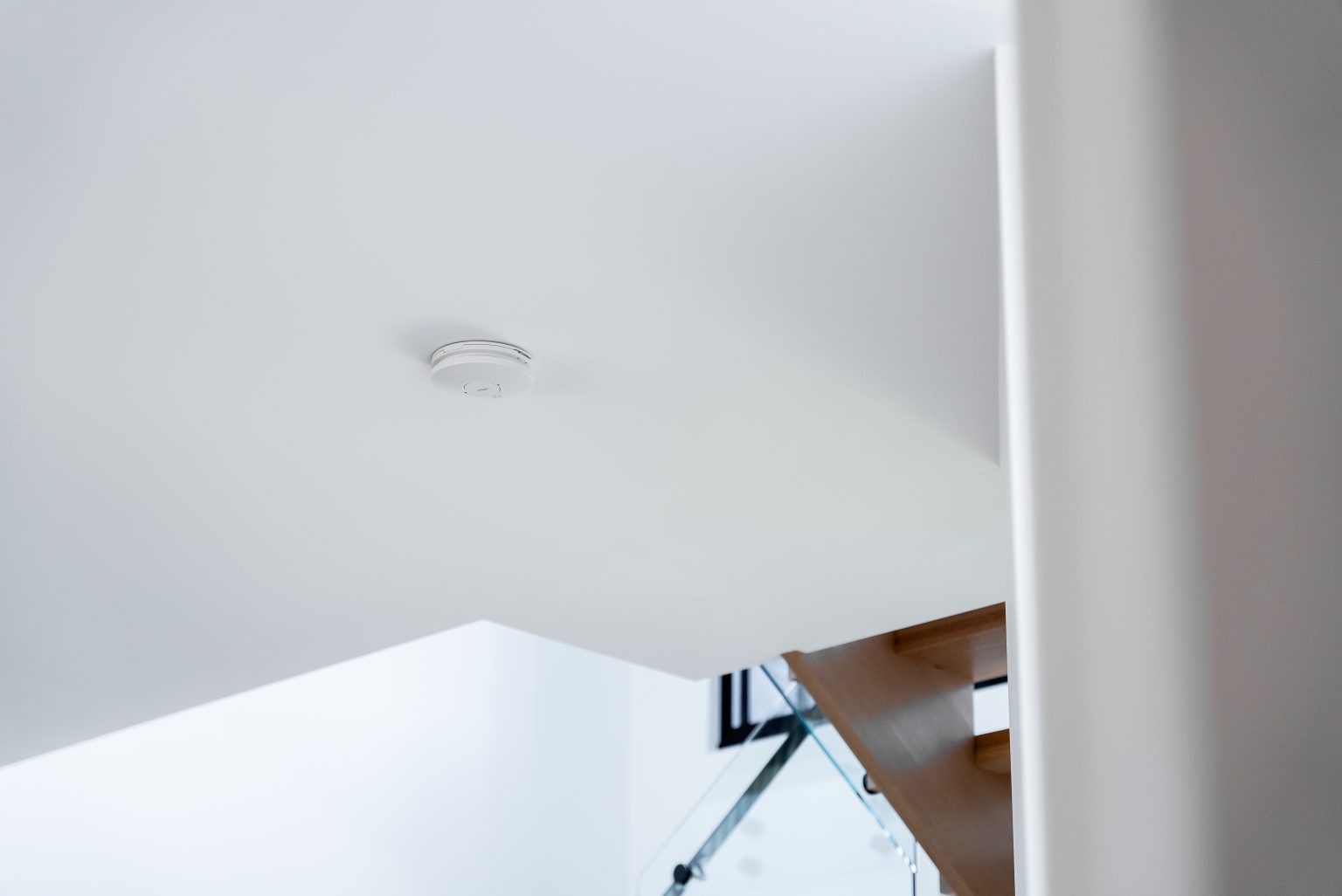
Smoke alarms are required on each storey of the property, including:
- inside every bedroom
- in hallways connecting bedrooms with the rest of the property
- between the bedrooms and other parts of the storey if there isn’t a hallway
- in the most likely path of travel to an exit where a storey doesn’t contain any bedrooms.
Specific positioning rules also apply around walls, corners, lights, ceiling fans, air conditioning outlets and certain ceiling designs. Refer to our complete QLD smoke alarm legislation guide for ceiling pitch, wall distance and corner positioning requirements.
Do the Alarms Have to Be Hardwired?
Not in every existing rental property.
Queensland allows compliant alarms to be interconnected through wired or wireless technology. An existing property may contain hardwired and battery-powered alarms depending on the building and its existing installation.
Where battery-powered alarms are permitted, they must use a non-removable 10-year battery.
If you’re replacing an existing 240V hardwired smoke alarm, however, the replacement must also be hardwired. New constructions and substantial renovations also have hardwired alarm requirements.
Landlord Smoke Alarm Obligations in QLD
Installing compliant alarms is only one part of your responsibility. The Fire Services Act 1990 (Qld) also sets requirements around testing, cleaning, batteries, replacement and interference with smoke alarms.
Make Sure the Required Alarms Are Installed
Before a property is rented or re-rented, its smoke alarm setup needs to meet the current Queensland requirements for alarm type, interconnection and placement.
The 30-Day Rule: Your Pre-Tenancy Smoke Alarm Checklist
Within the 30 days before a new tenancy starts or an existing tenancy is renewed, check the following:
- Test every smoke alarm to confirm that it’s operating correctly.
- Clean every alarm according to the manufacturer’s instructions.
- Replace spent or nearly spent replaceable batteries, where applicable.
- Replace any alarm that fails when tested.
- Check the manufacture date and replace alarms once they reach 10 years from their manufacture date.
- Confirm alarms haven’t been removed, disabled, covered or painted over.
- Check that the required alarms remain correctly positioned and interconnected.
The Residential Tenancies Authority confirms that the pre-tenancy testing and cleaning requirements also apply when a tenancy is renewed. A property manager or owner can’t transfer these pre-tenancy obligations to the tenant.
For sealed 10-year lithium smoke alarms, the battery isn’t designed to be removed or routinely replaced. Testing, cleaning and the 10-year alarm replacement requirement still apply.
Arrange Access When Testing or Maintenance Is Required
If you or your property manager need access during a tenancy to install, maintain, test or replace smoke alarms, Queensland tenancy rules generally require 48 hours’ notice to the tenant.
What Are Tenants Responsible For?
Once the tenancy has started, the tenant also has smoke alarm responsibilities.
Under Queensland requirements, tenants are responsible for:
- testing each smoke alarm at least once every 12 months
- cleaning each smoke alarm at least once every 12 months
- replacing spent or nearly spent replaceable batteries during the tenancy
- notifying the property manager or owner if an alarm has failed or appears to be about to fail.
Tenants must not remove smoke alarms or do anything that reduces their effectiveness.
These responsibilities don’t replace the landlord’s obligations. You’re still responsible for ensuring the property has the required compliant alarms and for completing the applicable checks before a new or renewed tenancy begins.
What Happens If a QLD Rental Property Doesn’t Comply?
Queensland Fire Department states that property owners and landlords who are proven not to have complied with smoke alarm legislation can receive an infringement notice.
Before a new tenancy or renewal, check for alarms that:
- aren’t photoelectric
- aren’t interconnected
- are missing from required locations
- are more than 10 years old
- don’t operate when tested
- don’t use the required power source when replacing an existing alarm.
If you have landlord insurance, check your policy or speak with your insurer about any fire safety and smoke alarm conditions that apply. Policy terms differ between insurers, so the effect of non-compliance will depend on the policy and circumstances.
Do Landlords Need a Smoke Alarm Compliance Certificate in QLD?
A general smoke alarm compliance certificate isn’t a legal requirement under Queensland smoke alarm legislation. Queensland Fire Department notes that real estate agents may ask smoke alarm servicing companies for this type of certificate as part of their own property management processes.
Electrical installation work is different. If a licensed electrical contractor carries out electrical installation work associated with a hardwired smoke alarm, Queensland electrical safety requirements provide for a Certificate of Testing and Compliance for that electrical work.
A non-removable 10-year battery-powered alarm doesn’t require an electrician simply because it uses wireless interconnection.
What Smoke Alarm Records Should Landlords Keep?
Maintaining clear records can make ongoing smoke alarm compliance in QLD rental properties easier to manage, particularly across multiple tenancies.
Consider keeping records of:
- alarm model
- location of each alarm
- manufacture or replacement date
- installation date
- dates alarms were tested and cleaned
- repairs or replacements
- electrical documentation supplied by an electrician, where applicable.
The RTA’s entry condition report also includes smoke alarms as an item to record at the beginning of a tenancy.
Does the 2027 QLD Smoke Alarm Deadline Affect Landlords?
No. Queensland rental properties have already been subject to the current interconnected photoelectric smoke alarm requirements since 1 January 2022. The 1 January 2027 deadline applies to remaining existing dwellings, including owner-occupied homes.
Landlords should instead focus on keeping existing alarms compliant, including replacing alarms within 10 years of their manufacture date.
For the complete rollout and broader requirements, see our QLD smoke alarm legislation guide.
Frequently Asked Questions
Not necessarily. Existing Queensland dwellings may use compliant 10-year non-removable battery-powered photoelectric alarms where appropriate, and interconnection may be wired or wireless.
If you’re replacing an existing 240V hardwired smoke alarm, however, its replacement must also be hardwired. New constructions and substantial renovations also have hardwired requirements.
You need to test every smoke alarm within 30 days before a new tenancy begins or an existing tenancy is renewed. During the tenancy, the tenant is responsible for testing the alarms at least once every 12 months.
No. Queensland rental properties have been required to meet the interconnected photoelectric smoke alarm requirements since 1 January 2022. The 1 January 2027 deadline applies to other existing dwellings that weren’t captured by an earlier stage of the rollout.
A general smoke alarm certificate of compliance isn’t legally required under Queensland smoke alarm legislation, although a real estate agency or property manager may request documentation as part of its own compliance process.
Separate electrical certification requirements apply when a licensed electrical contractor carries out electrical installation work.
A compliant non-removable 10-year battery-powered smoke alarm doesn’t require installation by an electrician. However, this doesn’t transfer the landlord’s responsibility for ensuring the rental property has the required compliant smoke alarms.
Any installation or replacement should therefore be coordinated so the property’s overall alarm setup continues to meet Queensland requirements.
A compliant non-removable 10-year battery-powered smoke alarm doesn’t require electrical installation by an electrician. A 240V hardwired smoke alarm must be connected to the electricity supply by a licensed electrician.
Whichever type is used, the alarms still need to meet Queensland requirements for technology, interconnection, placement and power source.
Choosing Smoke Alarms for a QLD Rental Property
The appropriate smoke alarm depends on the property’s existing power source and installation.
For existing properties where battery-powered alarms can be used, wireless interconnected photoelectric alarms with sealed 10-year batteries can meet the interconnection requirement without running interconnect wiring between the alarms. Battery-powered models can also be installed without electrical work, provided all other installation and placement requirements are met.
PSA’s wireless smoke alarm range includes the LIF6000DCW, a photoelectric smoke alarm with an in-built wireless RF interlink and non-replaceable 10-year lithium battery. It is approved to AS3786:2014.
For properties with existing compatible hardwired Lifesaver alarms, the LIF6000WB wireless interlink base provides a wireless interconnection option without running a separate interconnect cable between each compatible alarm.
You can also view PSA’s full range of photoelectric smoke alarms to compare hardwired, wireless and 10-year battery options. Before replacing an alarm, check its existing power source, as an existing hardwired alarm must be replaced with a hardwired model.
