Smoke alarms are a legal requirement across the Northern Territory under the Fire and Emergency Regulations 1996 (Part 2A). They must be installed correctly and kept in working order. In the NT, this applies to homes, rental properties, movable dwellings, caravans and other residential or temporary accommodation where people sleep.
As a minimum, every home must have at least one working photoelectric smoke alarm installed in approved locations. Approved smoke alarms must comply with Australian Standard AS 3786:2014, in line with NT smoke alarm requirements and the National Construction Code.
Here are the main smoke alarm laws Northern Territory homeowners and landlords should know:
Basic Requirements
- Approved smoke alarms are required in all residential premises and movable dwellings in the NT, including caravans.
- An approved smoke alarm is a photoelectric alarm that is either hardwired to mains power or powered by a sealed 10-year lithium battery.
- All approved smoke alarms must comply with Australian Standard AS 3786:2014.
- Homeowners must test each smoke alarm at least once every 12 months.
Rental Property Requirements
- When leasing or renewing a lease, the landlord must ensure an approved photoelectric smoke alarm is installed and working.
- Within 30 days before a tenancy begins, the owner must test each smoke alarm and replace any that do not function.
- It is the tenant’s responsibility to test each alarm at least once every 12 months and advise the owner or agent if an alarm is not working.
- Property managers or nominated persons may act on behalf of the owner to maintain, test or replace alarms.
New Homes & Building Work
- Hardwired smoke alarms must be installed by a licensed electrician.
Caravans & Movable Dwellings
NT regulations require at least one working photoelectric smoke alarm installed on the ceiling of every caravan, motorhome or movable dwelling. A sealed 10-year lithium battery alarm is an approved option.
Homes Not Connected To Mains Power
In dwellings not connected to mains power, photoelectric smoke alarms powered by a sealed, non-removable 10-year lithium battery may be installed in place of hardwired alarms.
Public Housing
Public housing in the NT is fitted with approved photoelectric smoke alarms with sealed 10-year batteries. Tenants must not remove or damage the alarm, and the Department handles replacement batteries on expiry.
Note: The governing legislation is the Fire and Emergency Regulations 1996 (NT), Part 2A. This is a general guide only. Requirements can vary depending on the property’s age, layout, and whether it has been renovated or extended. If you are unsure, speak with a licensed electrician or fire safety professional.
NT smoke alarm laws apply to owner-occupied homes, rental properties, movable dwellings, caravans, and temporary accommodation where people sleep.
The timeframes are as follows:
Smoke alarms should be installed so they provide the earliest possible warning to people in sleeping areas. In practical terms:
- Install smoke alarms between each bedroom area and the rest of the house. For homes with a common hallway serving the bedrooms, install the alarm in that hallway.
- Install an alarm inside any bedroom where someone sleeps with the door closed.
- On every storey of a multi-level home, install an additional alarm in the stairway between each level.
- Mount alarms on or near the ceiling where possible. If a wall-mounted position is needed, install between 300mm and 500mm below the ceiling.
- For caravans, install at least one photoelectric alarm on the ceiling.
- For manufactured homes and tents, install alarms on or near the ceiling in every hallway associated with a bedroom, or between the bedroom area and the rest of the dwelling if there is no hallway.
Avoid positioning alarms in dead air spaces, such as the corner junction of walls and ceilings or between exposed beams. Keep alarms at least 400mm from ceiling fan blades and away from bathrooms, cooking areas, and air vents, where steam, cooking fumes, or airflow can cause nuisance alarms.
Follow the relevant NT Government and NT Police, Fire and Emergency Services guidance for more information on smoke alarm requirements in the Northern Territory.
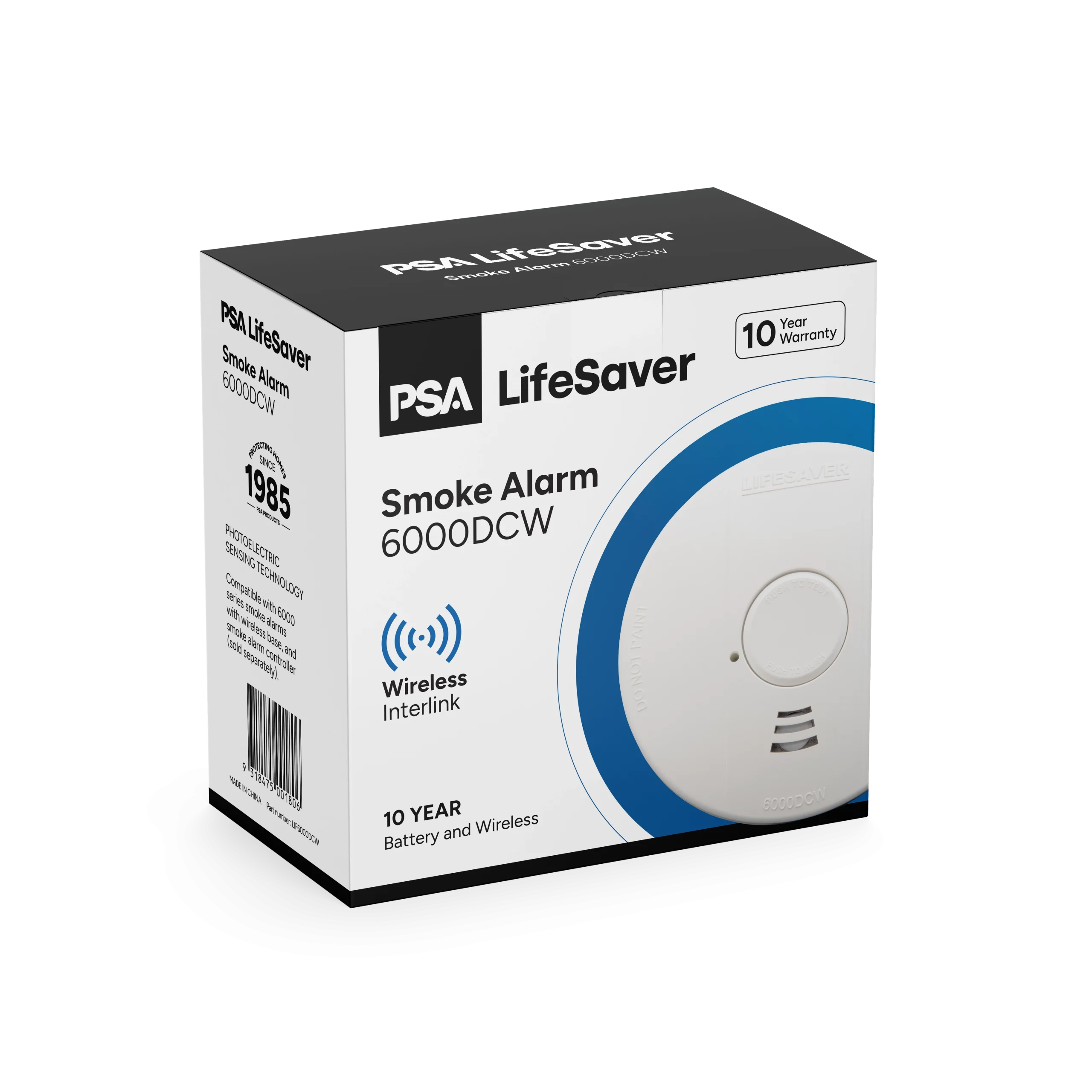
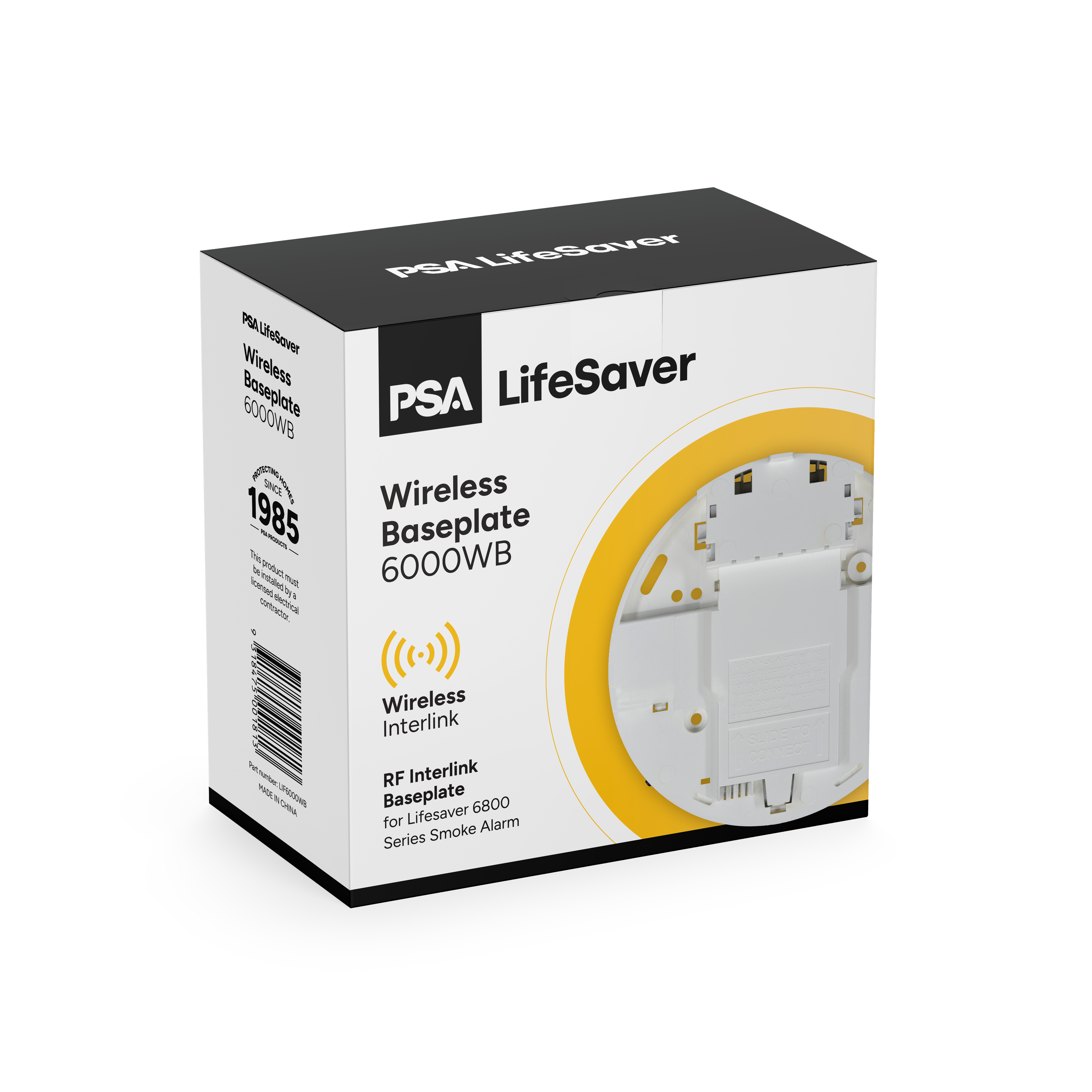
Make compliance easier with PSA’s range of smoke alarms and accessories, designed for a wide range of Northern Territory property types.