In Victoria, smoke alarms must be installed in all homes, units, flats, and townhouses, and be available on every level. Smoke alarms must also comply with Australian Standard AS 3786.

Below is a simple guide to what ‘compliant’ means, where to place alarms, who must follow the rules (including rentals), and how PSA’s Smoke Alarms can help.

What The Victorian Legislation Requires

Below are the essentials of smoke alarm regulations Victoria homeowners and rental providers should know (taken from Fire Rescue Victoria):

  • Smoke alarms must be installed on every level of all Victorian residential properties.
  • Smoke alarms must meet AS 3786 (Australian Standard).
  • Smoke alarms should be maintained monthly, tested yearly, and replaced when they reach end-of-life (commonly 10 years).

Note: This is a general guide. Requirements can vary based on building design and works undertaken – speak to your electrician or smoke alarm technician for property-specific advice.

Who It Applies To & When

Victorian smoke alarm legislation applies to all residential properties (houses, units, flats and townhouses) and the minimum requirements depend on when the property was built (or when major renovation/extension work was done).

  • Built before 1 August 1997: you can use standalone, battery-powered smoke alarms.
  • Built/renovated/extended after 1 August 1997: you’ll need hardwired (240V mains) smoke alarms, each with a backup battery.
  • Built/renovated/extended after 1 May 2014: if more than one alarm is required, they must be interconnected, hardwired (240V mains) and each have a backup battery.

Where The Alarms Must Go

For smoke detector requirements in Victoria, the goal is early warning on escape routes and near sleeping areas.

By law, smoke alarms must be installed between each sleeping area and the rest of the home, with at least one on every level (for example, in hallways outside bedrooms).

For best protection, Victorian fire services recommend placing smoke alarms in every bedroom and living area, as a hallway alarm may not activate quickly if a bedroom door is closed.

Roles & Responsibilities (Owner, Landlord, Tenant)

Owner / Occupier

Ensure your home has working smoke alarms installed on every level that are compliant with AS 3786.

Rental Provider (Landlord / Agent)

Rental providers must ensure that smoke alarms in the property:

  • are correctly installed and in working condition
  • are fitted with batteries or replacement batteries
  • are tested at least once every 12 months in accordance with the manufacturer’s instructions.

Rental providers must also provide renters with written instructions on how each smoke alarm works, how to test it, and the renter’s responsibilities (including not tampering with the alarms and reporting faults promptly). This helps keep smoke alarms compliant and working throughout the tenancy.

From 25 November 2025, rental properties must also have annual smoke alarm safety checks.

Renter (Tenant)

Renters must:

  • notify the rental provider if a smoke alarm is faulty or not working
  • not deactivate, remove or interfere with smoke alarms.

Broken smoke alarms are treated as urgent repairs once reported.

A Quick Checklist (Smoke Alarm Compliance VIC)

  • Do you have smoke alarms installed on every level?
  • Do your smoke alarms comply with AS 3786?
  • Was the home built/extended/renovated after 1 August 1997 (hardwired 240V + backup battery)?
  • Was the home built/extended/renovated after 1 May 2014 and thus require multiple alarms (interconnection)?
  • If it’s a rental, are alarms tested at least every 12 months, and are they ready for the annual safety check requirement imposed from 25 November 2025?

FAQ

Commercial requirements are usually assessed under the National Construction Code (NCC) and may require a smoke detection and alarm system (requirements vary by building class and design). For commercial compliance, speak with a building surveyor or fire safety professional.

In homes constructed or majorly renovated after 1 May 2014, more than one smoke alarm is required, and alarms must be interconnected so they all sound together.

Homes built or significantly renovated/extended after 1 August 1997 must have smoke alarms connected to 240V mains power with a backup battery.

Rental providers must ensure alarms are correctly installed, working, fitted with batteries, and tested at least once every 12 months. From 25 November 2025, rentals must also have annual smoke alarm safety checks.

Yes. If the renter reports that a smoke alarm isn’t working, the rental provider must arrange for an urgent repair or replacement.

Victorian fire services recommend replacing smoke alarm units at their 10-year expiry and upgrading to newer models where suitable.

Commercial requirements are usually assessed under the National Construction Code (NCC) and may require a smoke detection and alarm system (requirements vary by building class and design). For commercial compliance, speak with a building surveyor or fire safety professional.

Follow this link for more information on the Victorian Legislation.

How PSA Can Help

Make compliance easier with PSA’s range of smoke alarms and accessories, designed for different Victorian property types.

Compliant Protection

Our photoelectric alarms meet AS 3786 and can be interlinked, so if one activates, they all sound.

Options For Every Home

Choose between 240 V mains-powered alarms or wireless, sealed, 10-year battery-powered fire alarms, depending on your home’s needs.

Simple to Use/Install

Easy test, hush-and-locate functions, plus accessories that make neat installs possible (even on tricky ceilings).

Scales To Your Home

PSA systems are designed to interlink up to 24 alarms, so you can cover bedrooms, connecting hallways and each storey as needed.

Clear Guidance, Local Help

Straightforward labelling, practical installation tips and friendly Australian support when you need it.

Hardwired Smoke Alarms

For properties built or significantly renovated/extended after 1 August 1997, Victorian requirements call for 240V mains-powered smoke alarms with a backup battery. Hardwired smoke alarms must also be installed by a qualified electrician.

LIF6800

  • Photoelectric smoke alarm
  • Complies with AS3786:2014
  • 240V with 9v Backup battery
  • Interconnectable with up to 24 other smoke alarms and ancillary products
  • Can use wireless base (LIF6000WB) and wireless module (LIF6000WIRM) for wireless solutions.
Learn More

LIF6800RL

  • Photoelectric smoke alarm
  • Complies with AS3786:2014
  • 240V with 10-year rechargeable lithium backup battery
  • Interconnectable with up to 24 other smoke alarms and ancillary products
  • Can use wireless base (LIF6000WB) and wireless module (LIF6000WIRM) for wireless solutions
Learn More

HG3000

  • Photoelectric smoke alarm
  • Complies with AS3786:2014
  • 240V with 9v Backup battery
  • Interconnectable with up to 24 other HG3000 smoke alarms.
Learn More

LIF5800ACF

  • Photoelectric Smoke alarm
  • Complies with AS3786:2014
  • 240V with Sealed 10 year battery
  • Flush mounting design
Learn More

Battery Powered Smoke Alarms

The following alarms can be used in properties that require a smoke alarm but don’t have mains connected or don’t have a roof cavity to support mains connection.

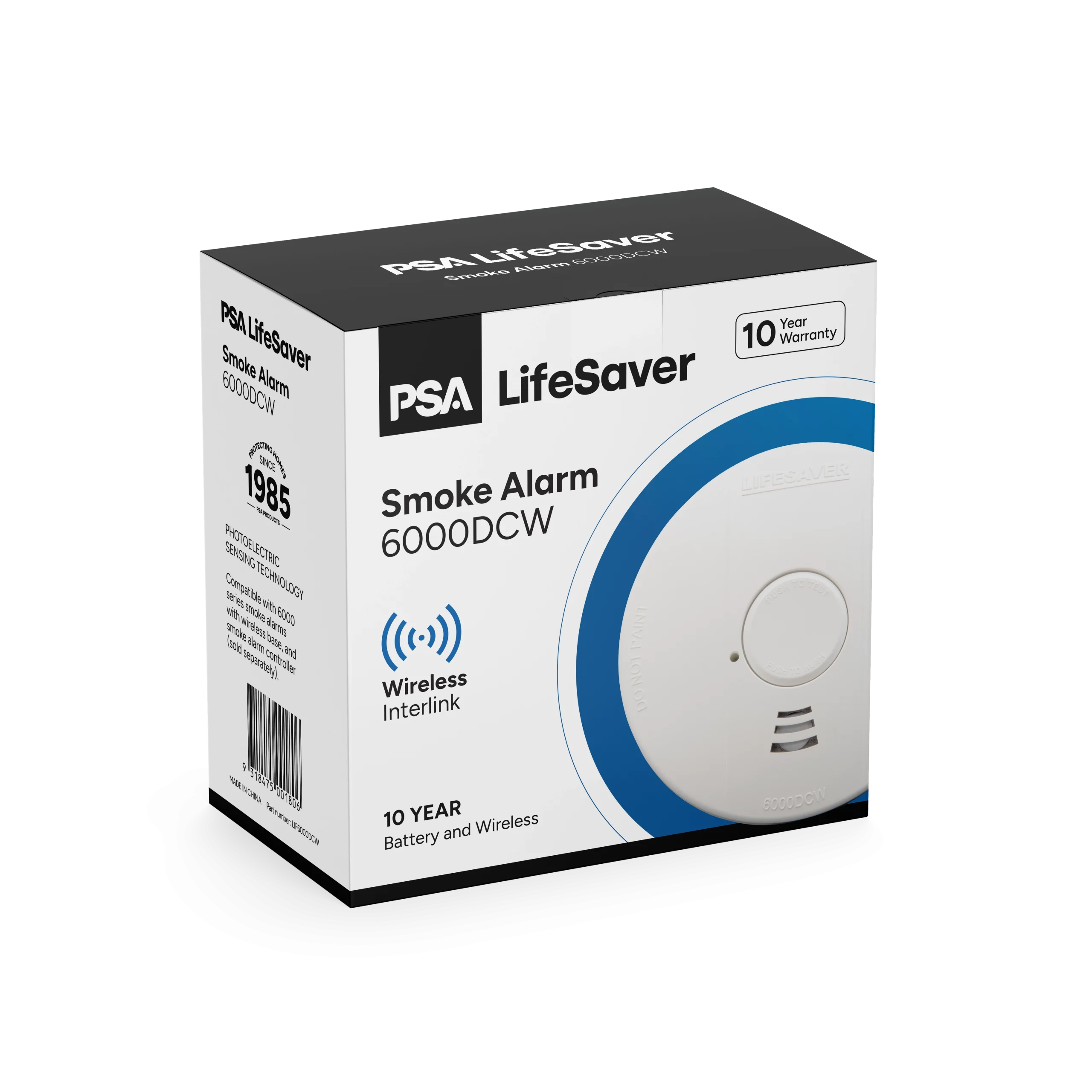
LIF6000DCW

  • Photoelectric smoke alarm.
  • Complies with AS3786:2014.
  • Sealed nonreplaceable 10-year lithium battery.
  • Interconnectable with up to 24 other wireless smoke alarm products.
Learn More

LIFPE10LP

  • Photoelectric Smoke alarm
  • Complies with AS386:2014
  • Sealed nonreplaceable 10-year lithium battery
  • Super flush award-winning design


Learn More

LIFPE9M

  • Photoelectric Design
  • Complies with AS3786:2014
  • 9V Battery Powered
Learn More

Wireless Smoke Alarms

For properties built before 1 August 1997, standalone battery-powered smoke alarms may be used (provided they comply with AS 3786 and are correctly installed).

LIF6000DCW

  • Photoelectric smoke alarm.
  • Complies with AS3786:2014.
  • Sealed nonreplaceable 10-year lithium battery.
  • Interconnectable with up to 24 other wireless smoke alarm products.
Learn More

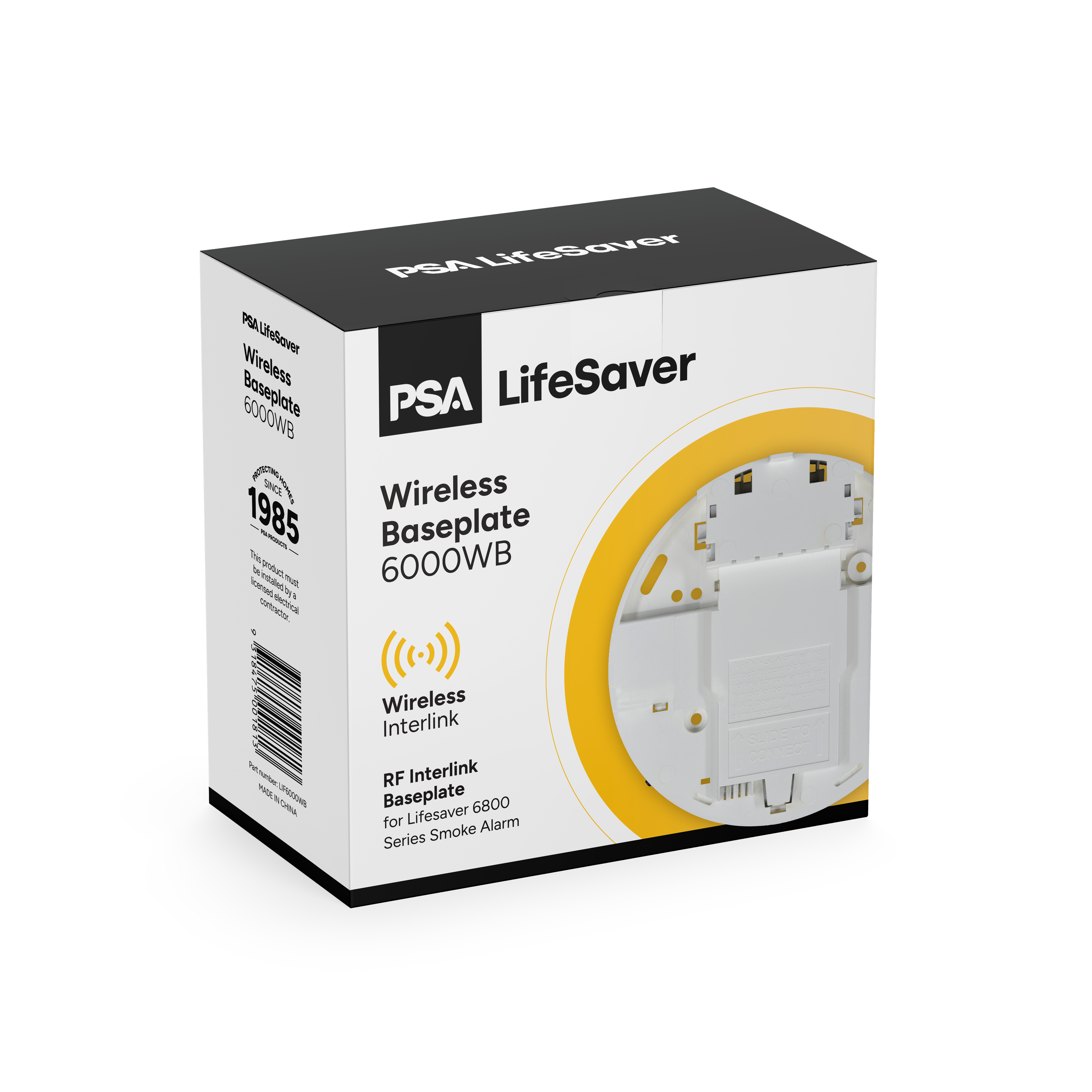
LIF6000WB

  • Allows LIF6800 and LIF6800RL smoke alarms to be wirelessly interconnected.
  • Powered by smoke alarm.
Learn More

LIF6000WIRM

  • Allows Lifesaver smoke alarms and other ancillary devices like heat alarms and carbon monoxide alarms to be wirelessly interconnected.
  • Powered by 240V mains.
Learn More

Wireless Controller

Handheld or wall-mount remote that lets you test, hush and locate alarms on a linked wireless network from one spot. Ideal for high ceilings, stairwells, and hard-to-reach installs. They simplify routine checks and help maintain consistent maintenance records.

LIF6000THL

Smoke alarms are usually installed on ceilings and when they require to be tested or silenced, reaching a smoke alarm on the ceiling can make this difficult. Wireless controllers allow you to remotely silence and test wireless smoke alarms.


Learn More

Others (Heat & CO Alarms)

Round out your protection with devices that address risks smoke alarms can’t, such as heat and carbon monoxide.

LIFHA240

  • Mains Powered heat detector designed to trigger at 57 degrees Celsius
  • 9VDC backup battery
  • Interconnectable with up to 24 other lifesaver smoke alarms and ancillary products


Learn More

LIFCO240

  • Mains powered carbon monoxide detector
  • Sealed lithium battery that will last the lifespan of the alarm (7 years)
  • Interconnectable with up to 24 other lifesaver smoke alarms and ancillary products.


Learn More

Get Compliant With PSA

From your first smoke alarm to a fully interconnected setup, PSA gives Victorians a clear path to full smoke alarm compliance. Shop now to explore your options, or speak with one of our experts for tailored advice.