Smoke alarms are required by law in many Western Australian homes. If your home has been built, renovated, sold, or rented since certain key dates, you must have mains-powered (hard-wired) smoke alarms that meet Australian Standard AS 3786, installed in the right locations.

Below is a plain-language guide to what the rules require, who they apply to, and which PSA products can help.

Shop Interconnected Photoelectric Alarms

What The Western Australia Legislation Requires

Here are the main smoke alarm regulations WA homeowners and landlords should know:

Basic Requirements

  • Smoke alarms are required in applicable residential dwellings, including homes that have been newly built, significantly renovated, sold, or made available for rent or hire since the relevant trigger dates.
  • At least one working smoke alarm must be installed in the hallway near bedrooms on every level. On levels with no bedrooms, an alarm is still required.
  • Smoke alarms must be positioned to give early warning to anyone sleeping in the home.
  • All alarms must carry the AS 3786 marking and comply with Australian Standard AS 3786.

Rental Property Requirements

  • Landlords and agents must ensure smoke alarms are installed and in working order in all rental properties, including short-term rental accommodation.
  • Faulty alarms must be repaired or replaced promptly, including the replacement of the backup battery if needed.
  • Each alarm must be replaced before it reaches 10 years from its manufacture date, or sooner if the manufacturer specifies a shorter period.

New Homes & Building Work

  • When more than one alarm is required, they will generally need to be interconnected so that if one sounds, they all sound.
  • Where mains power is available, alarms must be mains-powered.

Note: This page covers the main requirements, but individual properties can vary. If you have questions about your specific home, check with a licensed electrician or the relevant WA government authority.

Follow this link for more information on the Western Australia Smoke Alarm Legislation:

Who It Applies To & When

WA smoke alarm laws apply to owner-occupied homes, rental properties, apartments, relocatable homes, park homes, and other residential buildings where people sleep.

The key timeframes are as follows:

Mains-powered smoke alarms became mandatory for all new residential buildings and extensions in Western Australia from this date.

All existing homes must have mains-powered smoke alarms in place before being sold, rented, or hired.

New homes must have interconnected smoke alarms. Alarms are also generally required to be mains-powered where mains power is available.

Where Smoke Alarms Must Be Installed In WA

Where alarms go depends on the type of property. All alarms must be on or near the ceiling, at least 300mm from any wall.

Houses (Class 1a) – Detached, Townhouse, Terrace, Villa

Alarms go in the hallway near the bedrooms. Where there is no hallway, an alarm is needed in the area connecting the bedrooms to the rest of the house. Every level needs an alarm, even levels with no bedrooms.

Boarding Houses & Short-stay Accommodation (Class 1b)

Same as houses, plus an alarm inside every bedroom.

Apartments & Units (Class 2)

The same rules apply within each individual unit.

Caretaker’s Dwellings Within Commercial Buildings (Class 4)

Same rules as houses.

Park Homes

Must have compliant alarms if being sold, rented, or hired.

Where Not to Put Alarms

To avoid false alarms, keep alarms away from:

  • Kitchens and cooking areas
  • Bathrooms, laundries, or steamy areas
  • Within 300mm of a wall-ceiling corner or light fitting
  • Within 400mm of an air-con vent or ceiling fan

On sloped ceilings, place the alarm between 500mm and 1,500mm from the highest point.

Roles & Responsibilities

Landlord / Property Manager

  • Install hard-wired smoke alarms on every level, near bedroom areas.
  • Make sure alarms meet AS 3786, are working, and are under 10 years old before a tenancy starts.
  • Repair or replace any alarm that stops working, including backup batteries.
  • Interconnect alarms if the property was built (or permitted) after 1 May 2015.
  • Mount alarms with screws or brackets, not tape.
  • Keep a maintenance record, ideally updated at every inspection.

Renter (Tenant)

  • Report any non-working alarm to your landlord or property manager as soon as you notice it.
  • Replace a 9-volt backup battery yourself if the alarm is easy to reach.
  • If the alarm is hard to reach, it’s the landlord’s job to change the battery.
  • Never remove or tamper with smoke alarms.

A Quick Checklist (Smoke Alarm Compliance WA)

  • Are your alarms hard-wired, or, if battery-powered, do they use a sealed 10-year lithium battery in a permitted situation?
  • Do the alarms show the AS 3786 marking?
  • Are the alarms under 10 years old and working?
  • Are alarms in the right locations, near bedrooms on every level?
  • Are alarms at least 300mm from walls, lights, and vents?
  • If the home was built (or permitted) on or after 1 May 2015, do all alarms sound together when one is triggered?
  • Were the alarms installed by a licensed electrician?
  • If it’s a rental, are the records up to date?

FAQ

In most cases, yes. If your home has been built, renovated, sold, or rented since the relevant dates (1997 or 2009, depending on the situation), the law requires hard-wired alarms. Battery alarms are only allowed where it’s genuinely not possible to run wiring, such as in homes with concrete ceilings.

DFES recommends photoelectric smoke alarms for residential use. They’re better at detecting smouldering fires – the slow, smoke-producing fires most likely to start in a home. All PSA alarms in our range are photoelectric and AS 3786 compliant.

If your home was built (or received a building permit) on or after 1 May 2015 and has more than one alarm, they must all be connected, so when one sounds, they all sound. Older homes are exempt from interconnection requirements when sold or rented, but interconnection is still a good idea.

Only if the mains wiring cannot be run. For example, a concrete ceiling with no roof cavity. If that applies, you’ll need a sealed 10-year lithium battery alarm. A standard 9-volt battery alarm is not permitted.

Install hard-wired alarms on every level, keep them working and within 10 years of age, and fix any problems promptly. If the home was built (or permitted) on or after 1 May 2015, alarms must be interconnected. Keep a record of maintenance at each inspection.

You need a licensed electrician to install, repair, or remove hard-wired alarms. If you’re in a permitted battery-alarm situation, you can install those yourself following the manufacturer’s instructions.

It’s the Australian Standard that smoke alarms must meet to be sold and used in Australia. Check the alarm body for the AS 3786 marking before you buy.

If your home hasn’t been built, significantly renovated, sold, or rented since the relevant trigger dates, you’re not legally required to have hard-wired alarms. But DFES recommends that every home has working smoke alarms. A battery alarm with a 10-year sealed battery is a straightforward option.

How PSA Can Help

PSA’s range of smoke alarms and accessories is designed to cover the full range of WA property types and trigger situations, making it straightforward to meet your obligations.

Compliant Protection

Our photoelectric alarms meet AS 3786 and can be interlinked, so if one activates, they all sound.

Options For Every Home

Choose between 240 V mains-powered alarms or wireless, sealed, 10-year battery-powered fire alarms, depending on your home’s needs.

Simple to Use/Install

Easy test, hush-and-locate functions, plus accessories that make neat installs possible (even on tricky ceilings).

Scales To Your Home

PSA systems are designed to interlink up to 24 alarms, so you can cover bedrooms, connecting hallways and each level as needed.

Clear Guidance, Local Help

Straightforward labelling, practical installation tips and friendly Australian support when you need it.

Hard-wired Smoke Alarms

Required for most WA homes that have been built, renovated, sold, or rented since the trigger dates. Must be installed by a licensed electrician.

LIF6800

  • Photoelectric smoke alarm
  • Complies with AS3786:2014
  • 240V with 9v Backup battery
  • Interconnectable with up to 24 other smoke alarms and ancillary products
  • Can use wireless base (LIF6000WB) and wireless module (LIF6000WIRM) for wireless solutions.
Learn More

Lorem ipsum dolor sit amet...

LIF6800RL

  • Photoelectric smoke alarm
  • Complies with AS3786:2014
  • 240V with 10-year rechargeable lithium backup battery
  • Interconnectable with up to 24 other smoke alarms and ancillary products
  • Can use wireless base (LIF6000WB) and wireless module (LIF6000WIRM) for wireless solutions
Learn More

HG3000

  • Photoelectric smoke alarm
  • Complies with AS3786:2014
  • 240V with 9v Backup battery
  • Interconnectable with up to 24 other HG3000 smoke alarms.
Learn More

LIF5800ACF

  • Photoelectric Smoke alarm
  • Complies with AS3786:2014
  • 240V with Sealed 10 year battery
  • Flush mounting design
Learn More

HG140AC

  • Photoelectric smoke alarm
  • Tested and approved to the AS3786 standard.
  • Equipped with a loud 85dBA sounder compliant with ISO8201.
  • Operates as a single unit or can interconnect with up to 48 alarms.
  • Comes with a 10-year warranty for long-lasting protection.
Learn More

10-Year Sealed Battery Smoke Alarms (Permitted Situations Only)

For homes where mains wiring genuinely cannot be run, such as those with concrete ceilings. The battery must be sealed and non-removable. Standard 9-volt alarms are not permitted in homes subject to sale or rent.

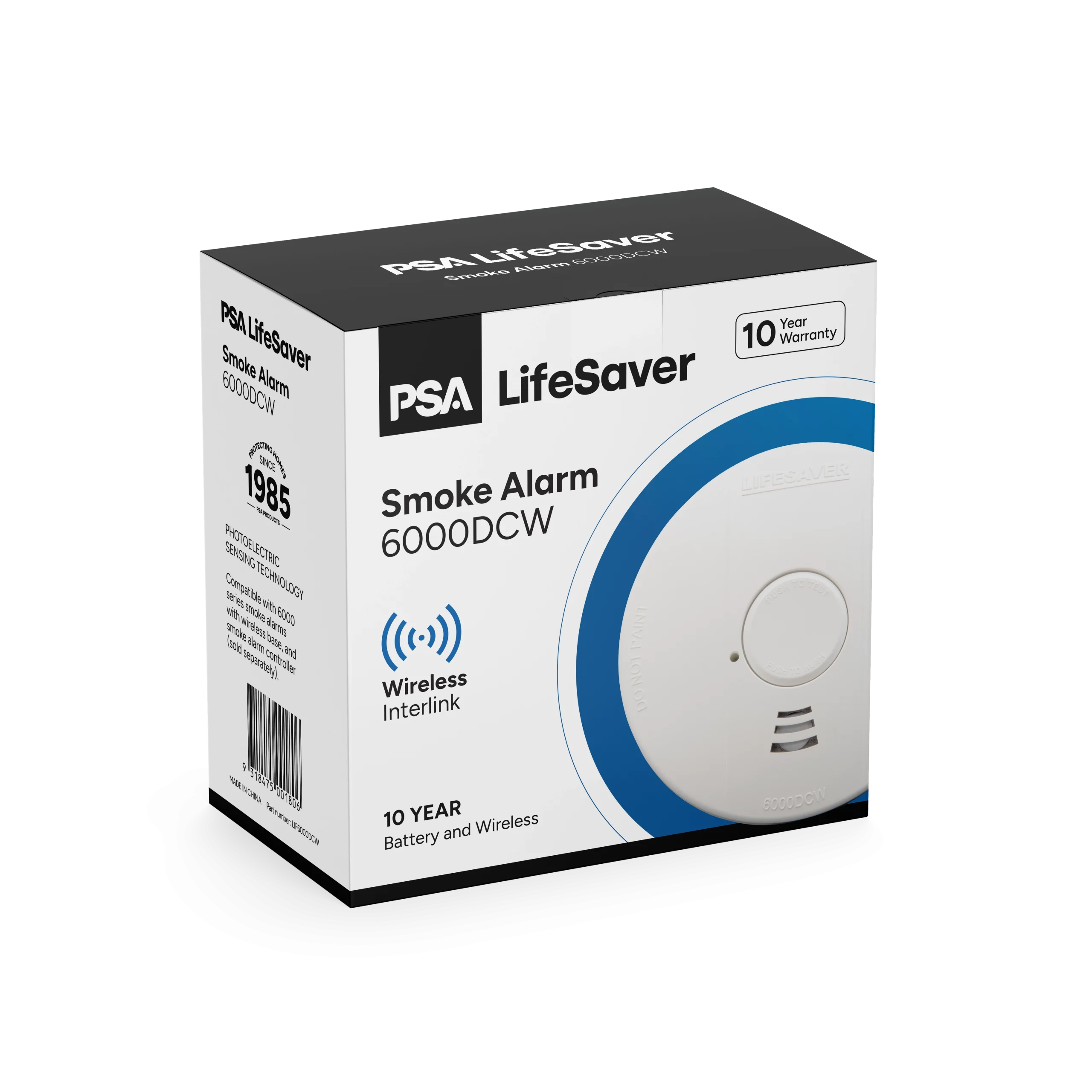
LIF6000DCW

  • Photoelectric smoke alarm.
  • Complies with AS3786:2014.
  • Sealed nonreplaceable 10-year lithium battery.
  • Interconnectable with up to 24 other wireless smoke alarm products.
Learn More

LIFPE10LP

  • Photoelectric Smoke alarm
  • Complies with AS386:2014
  • Sealed nonreplaceable 10-year lithium battery
  • Super flush award-winning design
Learn More

Wireless Solutions

Where interconnection is needed but new wiring isn’t practical, wireless bases and modules let alarms communicate without cables. Useful for older homes or mixed hard-wired and battery setups.

LIF6000DCW

  • Photoelectric smoke alarm.
  • Complies with AS3786:2014.
  • Sealed nonreplaceable 10-year lithium battery.
  • Interconnectable with up to 24 other wireless smoke alarm products.
Learn More

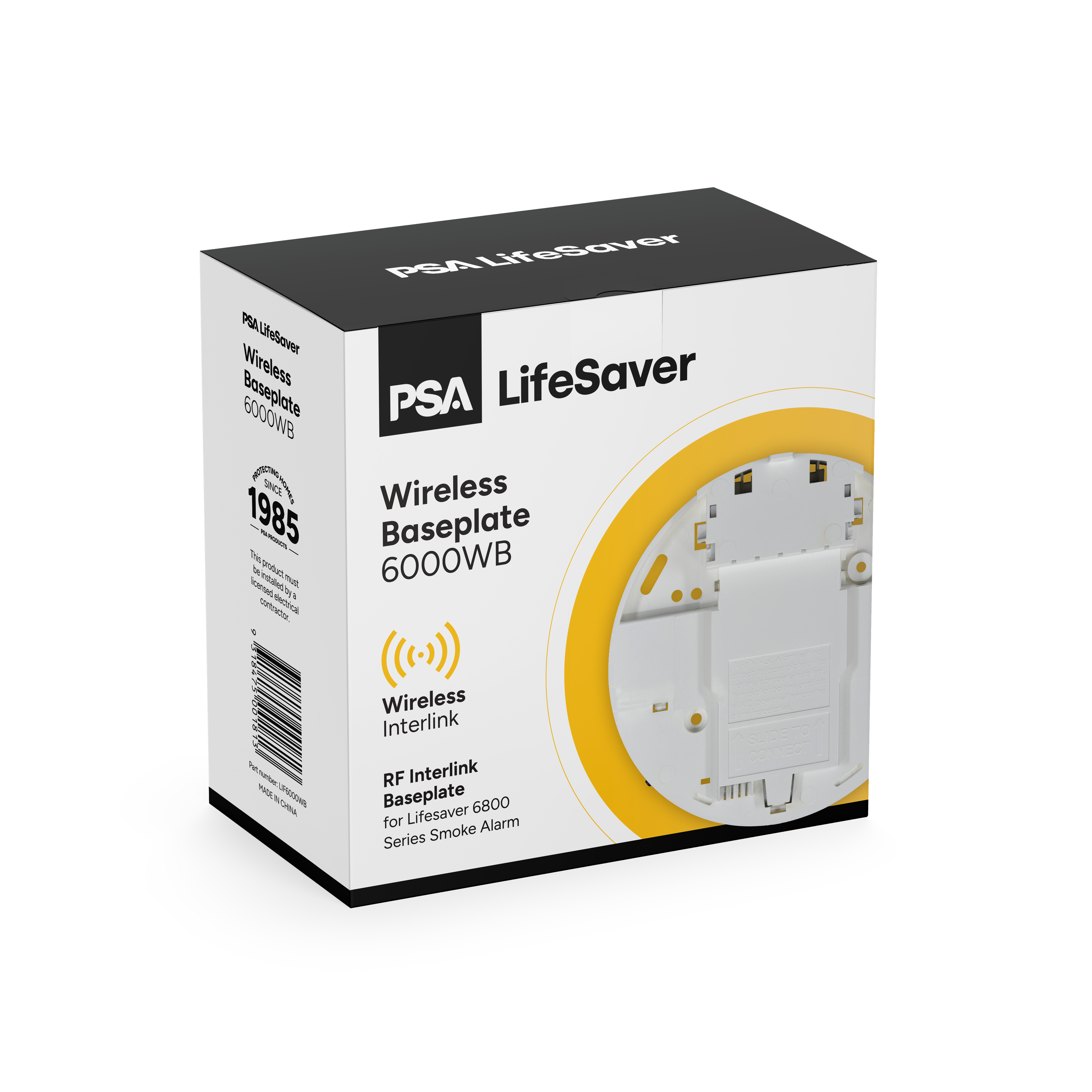
LIF6000WB

  • Allows LIF6800 and LIF6800RL smoke alarms to be wirelessly interconnected.
  • Powered by smoke alarm.
Learn More

LIF6000WIRM

  • Allows Lifesaver smoke alarms and other ancillary devices like heat alarms and carbon monoxide alarms to be wirelessly interconnected.
  • Powered by 240V mains.
Learn More

Wireless Controller

A remote that lets you test, hush, and locate alarms from floor level. Handy for high ceilings and hard-to-reach installs.

LIF6000THL

Smoke alarms are usually installed on ceilings and when they require to be tested or silenced, reaching a smoke alarm on the ceiling can make this difficult. Wireless controllers allow you to remotely silence and test wireless smoke alarms.


Learn More

Others (Heat & CO Alarms)

Heat alarms are suitable for kitchens and garages where smoke alarms may falsely trigger. Carbon monoxide alarms are worth considering in homes with gas appliances.

LIFHA240

  • Mains Powered heat detector designed to trigger at 57 degrees Celsius
  • 9VDC backup battery
  • Interconnectable with up to 24 other lifesaver smoke alarms and ancillary products
Learn More

LIFCO240

  • Mains powered carbon monoxide detector
  • Sealed lithium battery that will last the lifespan of the alarm (7 years)
  • Interconnectable with up to 24 other lifesaver smoke alarms and ancillary products.
Learn More

Get Compliant With PSA

Whether you need a single replacement or a complete setup for a WA rental, PSA has the right alarm for the job. Browse online or get in touch for tailored advice.