


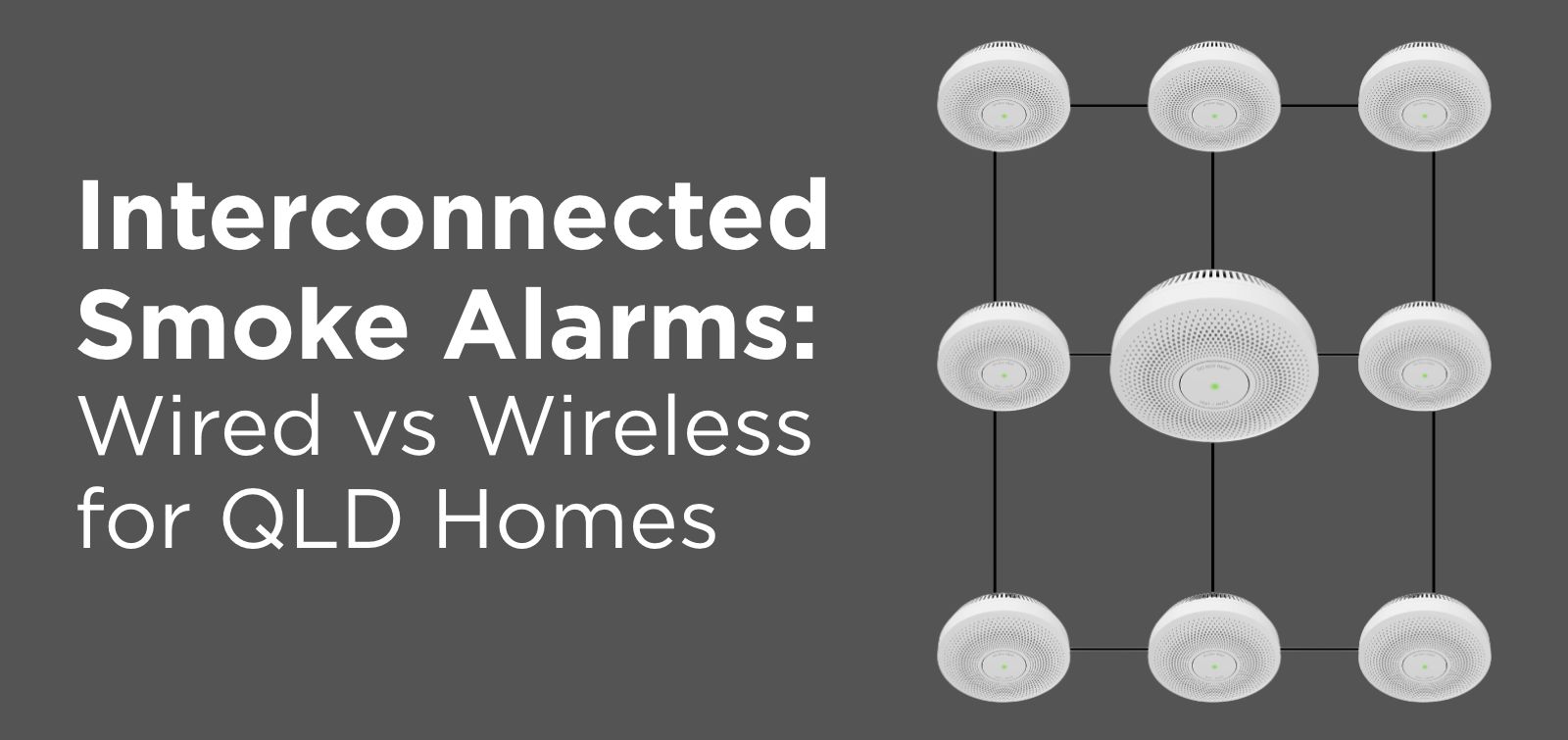
Interconnected smoke alarms sound when one detects smoke. They connect via wire, radio signal or both.
In an existing home, the alarms already on your ceiling decide most of the choice between wired and wireless. A hardwired alarm can only be replaced with another hardwired alarm, and alarms from different systems won’t link unless the manufacturer has made them compatible. This guide starts from what’s installed now and maps PSA’s range to each setup that works: all wired, all wireless or a mix of the two.
What Are Interconnected Smoke Alarms?
Interconnected smoke alarms (also called interlinked or linked smoke alarms) are linked so that when one detects smoke, every alarm in the home sounds. A fire in the living room will also set off the bedroom alarms.
Smoke alarms can be linked together in one of two ways:
- Wired interconnection: 240V alarms are joined by an interconnect cable that runs through the ceiling.
- Wireless RF interconnect: each alarm has a built-in radio module and signals the others directly, with no cable between them.
Wireless linked smoke alarms talk alarm to alarm, so your home Wi-Fi and internet play no part. To find out whether your current alarms already link, use the test in the before-you-buy checklist below.
Wired vs Wireless Interconnected Smoke Alarms Compared
A 240V alarm can connect by cable or, with a wireless baseplate, wirelessly. A sealed-battery alarm connects only wirelessly. So a home can have one of three setups.
| Feature | All Hardwired (240V) | All Wireless (Sealed Battery) | Mixed (240V and Wireless) |
|---|---|---|---|
| Power and backup | 240V mains with a backup battery | Non-removable 10-year lithium battery | Both, and the 240V backup battery keeps the wireless link up in a power cut |
| How they link | Interconnect cable | Wireless RF signal | Baseplate or interlink module on each 240V alarm, RF to the rest |
| Who installs | Licensed electrician | No electrical work (check the manufacturer’s terms) | Licensed electrician for the 240V side |
| Where it suits | New builds, major renovations, homes already wired | Homes with battery alarms only | Homes with one or two hardwired alarms |
| Replacing an alarm | Like-for-like, by an electrician | The whole alarm (sealed battery) | 240V like-for-like, battery units whole |
| Common nuisances | False alarms from power fluctuations or dimmer circuits | A flat battery means a new alarm | Every unit must belong to one compatible system |
Hardwired smoke alarms suit new builds where they’re required, and homes already wired for them. Wireless suits homes with no 240V alarm wiring. Compare PSA’s hardwired 240V smoke alarms for the wired options.
Can You Mix Hardwired and Wireless Smoke Alarms?
Yes, as long as every unit belongs to the same compatible system. That suits a common layout in older homes (a hardwired alarm or two in the hallway, battery alarms in the bedrooms). You keep the hardwired alarms and skip running new cable through the ceiling.
How Does a Hybrid Interconnected System Work?
Each 240V alarm gets its own wireless baseplate, which gives it a radio link. Battery alarms have one built in, so once they’re paired, they all sound together.
In PSA’s Lifesaver range, the LIF6000WB wireless baseplate fits the LIF6800 and LIF6800RL 240V alarms. It links them to the LIF6000DCW, a sealed 10-year lithium smoke alarm, for wiring-free rooms. For non-wireless Lifesaver alarms such as the LIF5800ACF, the LIF6000WIRM wireless interlink module joins up to 12 cabled alarms to the same network.
A single network takes up to 24 RF devices. PSA’s instructions say not to connect its wireless products to another brand unless PSA has approved it, so check model numbers before you buy. Your electrician can confirm whether your existing alarms need a baseplate or replacement.
Do Wireless Interconnected Smoke Alarms Meet the Rules?
Yes. Under Queensland rules, a wireless alarm complies if it’s photoelectric, certified to AS3786:2014, powered by a non-removable 10-year battery and linked to every other required alarm. Other states set their own requirements.
Wireless alarms can’t replace an existing hardwired alarm, though. That one has to be replaced with another 240V model.
Do You Need an Electrician to Replace Hardwired Smoke Alarms?
For hardwired 240V alarms, yes. Installing or replacing a hardwired smoke alarm is licensed electrical work. You also can’t swap a 240V unit for a battery alarm, even one that links wirelessly. PSA also specifies a licensed electrician for its LIF6000WB baseplate and LIF6000WIRM module.
Sealed battery smoke alarms involve no electrical work, so you don’t need an electrician to fit them. Check the installation and warranty terms first, though: PSA’s datasheet for the LIF6000DCW specifies a licensed installer.
If you can’t tell whether an alarm is mains-powered, leave it on the ceiling and ask an electrician to check.
Which Interconnected Smoke Alarm Setup Suits Your Home?
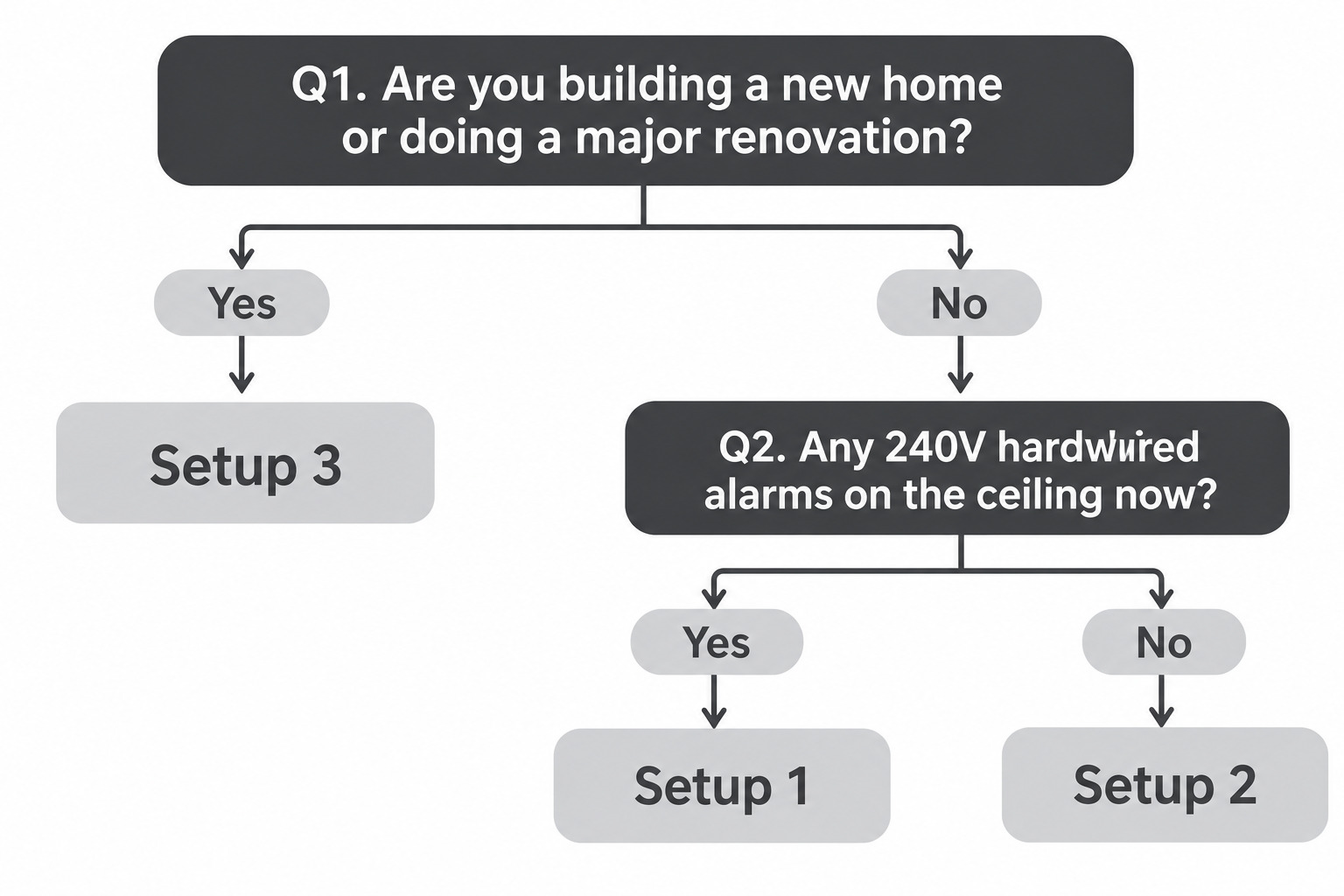
1. Your Home Has Some Hardwired Alarms
Keep the hardwired alarms hardwired and link the rest wirelessly. In PSA’s range, that’s a LIF6000WB baseplate on each LIF6800 or LIF6800RL, with LIF6000DCW alarms in the rooms with no wiring. If the hardwired alarms are close to 10 years old or faulty, have them replaced during the same visit. Electricians quoting the job should allow one baseplate per 240V alarm.
2. Your Home Only Has Battery Alarms
Replace them with a full set of wireless linked smoke alarms on sealed 10-year batteries, with no cable running between rooms. PSA’s wireless smoke alarm range covers this setup.
3. You’re Building or Doing a Major Renovation
New builds and major renovations need hardwired 240V interconnected smoke alarms. Plan the alarm locations and cable runs with your builder and electrician before the plasterboard goes up.
What Queensland Homes Need Before 1 January 2027
From 1 January 2027, every remaining existing home in Queensland (including townhouses, units and manufactured homes) needs interconnected photoelectric smoke alarms. Homes sold or leased since 2022 have needed them. See Queensland smoke alarm legislation for the full rules and what changes on 1 January 2027.
What to Check Before Buying Interconnected Smoke Alarms
- What you have now: Note each alarm’s power source, brand, model number and manufacture date. Don’t take down a 240V alarm yourself to check.
- Age and condition: Replace any alarm 10 years after its manufacture date, or sooner if it’s faulty.
- One system: Buy every alarm and accessory from one compatible system. Landlords replacing an expired unit should match what’s already on the network.
- Electrician: Book one for any 240V alarm, baseplate or interlink module.
- Test the system: Press the test button on one alarm. Every other alarm should sound (after a short delay on a wireless network).
PSA’s LIF6000THL test and hush remote lets you run that test from the floor. It pairs with Lifesaver 6000 series wireless alarms such as the LIF6000DCW, and also hushes and locates alarms on the network.
FAQs
Yes. Wireless alarms run on a sealed 10-year battery and link to each other by radio signal, with no cable between them and no reliance on Wi-Fi. They suit homes without 240V alarm wiring. PSA’s LIF6000DCW links with up to 24 compatible units, including hardwired Lifesaver alarms on a wireless baseplate.
In practice, yes. Alarms link only with models the manufacturer has made compatible, and PSA’s instructions say not to connect its wireless products to another brand unless PSA has approved it. Check model numbers against the compatibility list before you buy.
Yes, 10 years from the date of manufacture, or sooner if an alarm is faulty or fails testing. A hardwired smoke alarm has to be replaced with another hardwired model, installed by a licensed electrician. If several alarms are close to 10 years old, replacing them together saves a second call-out.
Find Interconnected Smoke Alarms at PSA Products
PSA Products has supplied fire safety equipment since 1985. Its range includes Lifesaver wired and wireless alarms, and it sells to licensed electricians on trade and wholesale terms. Whatever’s on your ceiling now, PSA has hardwired, wireless and hybrid options that link within one system.
Browse PSA Products’ interconnectable smoke alarm range to match alarms to your home, or contact PSA Products with your model numbers to check compatibility or place a trade order.
